Here’s a stat that should make every D2C founder stop and think: acquiring a new customer costs five to seven times more than retaining an existing one. You already know this intellectually. But when your entire marketing operation is built around Meta Ads, Google campaigns, and influencer seeding, almost all your budget flows toward acquisition — and customer retention marketing stays on the “we’ll get to it” list indefinitely.
That’s expensive. The brands that are quietly winning on margin aren’t always the ones spending the most on acquisition. They’re the ones who’ve built retention into the fabric of how they operate — systematically squeezing more revenue from every customer they’ve already paid to acquire. This is the playbook they’re using in 2026.

Why Customer Retention Deserves Its Own Budget Line
Most D2C brands treat retention as an afterthought — a post-purchase email sequence set up once and never touched, or a discount code sent to lapsed customers. That’s not a retention strategy. A real retention strategy treats your existing customer base as an asset that compounds, not a list to occasionally blast.
The maths is straightforward. If your average order value is ₹1,200 and a customer buys twice a year, their annual value is ₹2,400. Improve retention so they buy three times a year — without spending a rupee more on acquisition — and their annual value jumps to ₹3,600. Do that across your customer base and you’ve grown revenue without touching your ad account. That’s the power of lifetime value (LTV) optimization.
The LTV Calculation Every D2C Brand Should Track
Customer LTV = Average Order Value × Purchase Frequency × Customer Lifespan
If you don’t know these numbers for your brand, stop here and pull them from your analytics before anything else. Every retention decision — how much to spend on email, whether to build a loyalty programme, what churn rate is acceptable — should flow from these numbers.
The Four Pillars of D2C Customer Retention in 2026
1. Email Automation: Your Highest-ROI Retention Channel
Email is not dead. For D2C brands, it consistently delivers among the highest returns of any owned channel — and the brands extracting the most from it aren’t sending newsletters. They’re running automated flows that trigger based on behaviour.
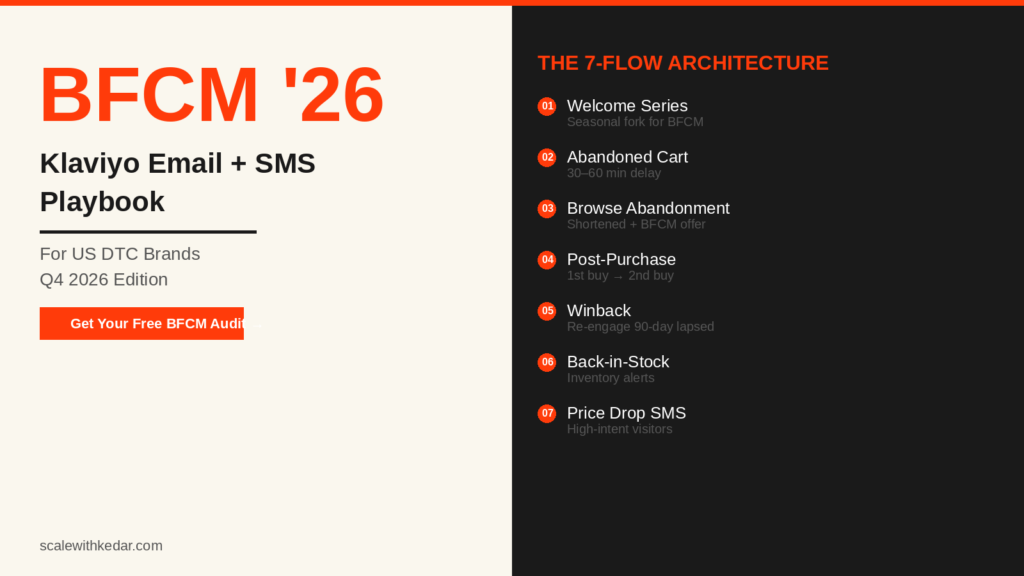
The four email flows every D2C brand needs to have live before focusing on anything else:
- Welcome series (3–5 emails): Sent immediately after signup or first purchase. Introduce the brand story, set expectations, explain what makes your products different. This is where you win or lose long-term loyalty. Don’t waste it on a single discount code.
- Post-purchase sequence: Triggered after every order. Confirm the order, then follow up with usage tips, how-to content, and cross-sell recommendations based on what they bought. A well-designed post-purchase flow can meaningfully lift second-purchase rate within 60 days.
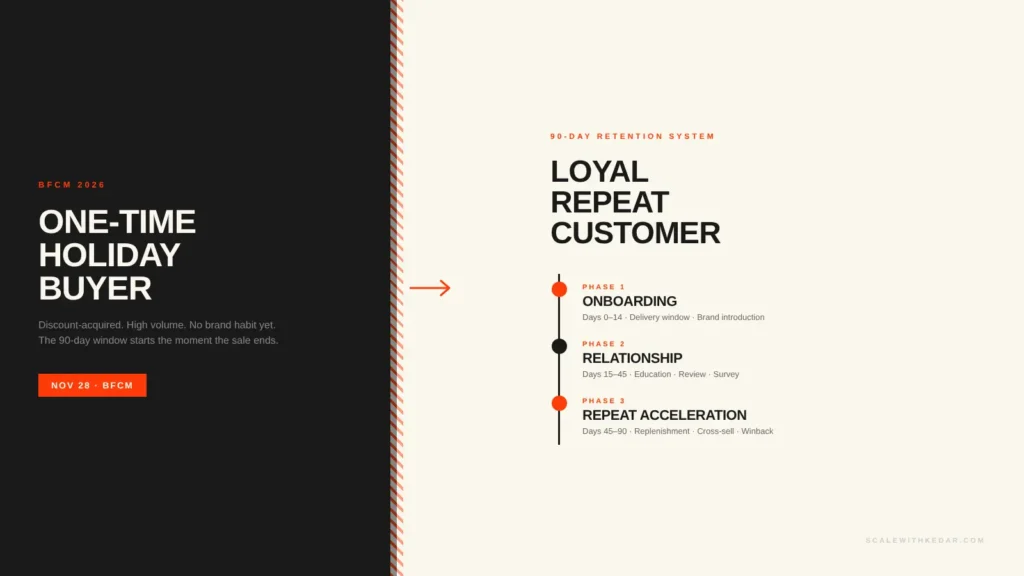
- Win-back campaign: Triggered when a customer hasn’t purchased in 90–120 days. Don’t start with a discount. Start with a question: “We noticed you haven’t been around — did something change?” Personalise based on their last purchase. Discounts come only in later emails if the first few don’t convert.
- Browse/cart abandonment: You’re already running this, likely. If not, it’s the single highest-converting flow you can set up. Segment by abandonment stage — browsed vs. added to cart vs. reached checkout — and customise the messaging accordingly.
Tools worth knowing: Klaviyo remains the gold standard for D2C email automation and has the deepest Shopify integration. If you’re early-stage or budget-conscious, Mailchimp and Brevo (formerly Sendinblue) offer functional starting points. For brands that need advanced segmentation and journey logic, tools like Drip are worth exploring.
2. SMS and WhatsApp: The High-Attention Retention Channels
Email open rates average somewhere around 20–25% for well-run D2C brands. SMS open rates sit much higher — and WhatsApp even more so for markets where it’s the primary messaging app. These channels aren’t replacements for email; they’re amplifiers for time-sensitive moments.
Where SMS and WhatsApp retention messaging works best:
- Flash sale alerts to your highest-LTV customer segment
- Replenishment reminders for consumable products (protein powder, skincare, coffee)
- Order update notifications (which build brand trust even when they’re routine)
- Post-review requests 7–10 days after delivery
One important discipline: don’t broadcast. Use these channels for targeted, behaviour-triggered communication rather than mass messages. The moment customers feel spammed on WhatsApp, they block you — and you lose the channel permanently for that person.

3. Loyalty and Rewards Programmes: Done Right, Not Just Done
Most D2C loyalty programmes fail because they’re designed around the wrong incentive. Points systems that take 15 purchases to redeem anything meaningful don’t create loyalty — they create annoyance. The programmes that actually change purchase behaviour share a few traits:
- Immediate value: Something the customer can use right now, or within their next purchase. Not after six months of accumulation.
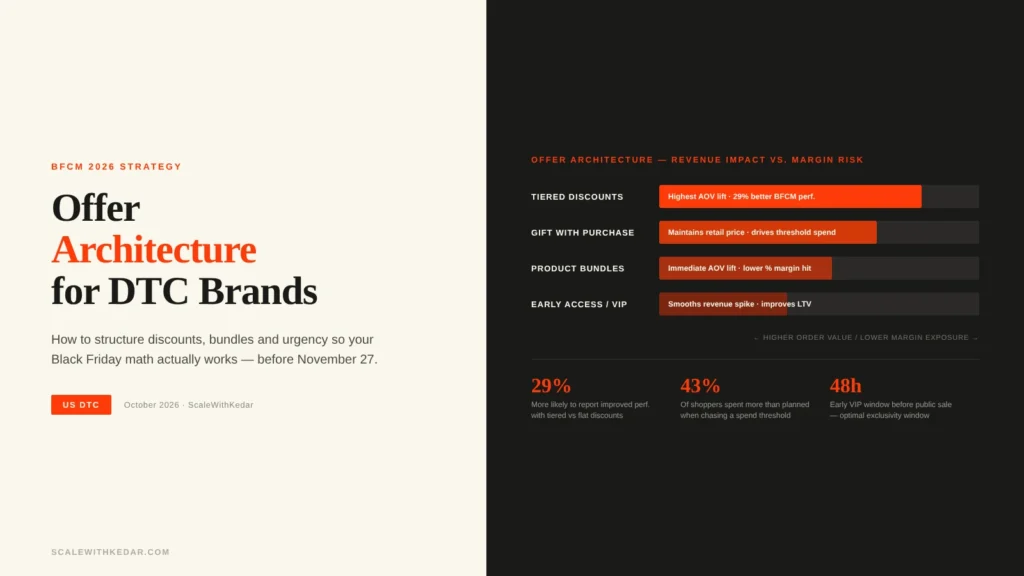
- Non-discount rewards where possible: Early access to new products, personalised samples, free shipping thresholds — these build brand affinity in a way that 10% discount coupons don’t.
- Tiered status: “Bronze → Silver → Gold” structures create aspiration and give your most valuable customers a reason to feel recognised. Track tier status openly so customers can see where they are.
Tools: Yotpo Loyalty, LoyaltyLion, and Smile.io are the most widely used in the D2C space. For early-stage brands, a simple punch-card model handled via your email platform can work before you invest in a dedicated tool.
4. Post-Purchase Experience: The Most Overlooked Retention Lever
The experience after the “Buy” button is clicked is where most D2C brands go silent. Tracking pages are generic. Packaging is forgettable. There’s no moment of delight. And then they wonder why repeat purchase rates are low.
Small investments here pay disproportionate returns:
- Branded tracking experience: Tools like Narvar or Aftership turn generic carrier tracking into a branded experience with cross-sell opportunities and review prompts.
- Unboxing moment: A handwritten card, a sample of a product you think they’d love based on their purchase, a QR code to a how-to video. These cost almost nothing per unit but generate user-generated content and repeat buyers.
- Review and UGC prompting: A well-timed review request (7–10 days after confirmed delivery) with a specific, easy ask (“Upload a photo of your order for 15% off your next purchase”) generates both social proof and repeat purchase intent in a single action.
Building a Retention Dashboard: The Metrics That Actually Matter
You can’t improve what you don’t measure. A retention dashboard for a D2C brand should track at minimum:
- Repeat purchase rate: What percentage of customers place a second order within 90, 180, and 365 days?
- Average order frequency: How many times per year does an active customer buy?
- Customer LTV by cohort: How do customers acquired in January compare to those acquired in October? Cohort analysis reveals seasonal and channel quality differences that averages hide.
- Churn rate: How many customers have gone 120+ days without a purchase? Segment this by acquisition channel — you may find Meta Ads customers churn faster than email-acquired ones, for example.
- Email/SMS engagement rates: Not just opens — click rates, conversion rates, and revenue-per-recipient by flow type.
The Retention-Acquisition Balance: Finding Your Brand’s Optimal Ratio
There’s no universal right answer to how much budget should go toward retention versus acquisition. But a useful rough benchmark: if your repeat purchase rate is below 25%, retention almost certainly needs more investment before you scale acquisition further. Pouring fuel into a leaky bucket rarely ends well.
Brands that have cracked retention often find a counterintuitive dynamic: the stronger their retention metrics, the more confidently they can spend on acquisition — because the lifetime value of each acquired customer is higher and the acceptable CPA ceiling rises accordingly. Retention and acquisition aren’t competing priorities. Retention is what makes aggressive acquisition sustainable.
If you’re working on scaling a D2C brand and want a structured audit of where your retention strategy has gaps — the flows that are missing, the metrics you’re not tracking, the channels you’re underusing — that’s exactly the kind of work I do with brands. The contact page is the fastest way to start a conversation.