
Q4 is the make-or-break quarter for US DTC brands. If your email list is thin, your flows are sloppy, or your campaigns are one-size-fits-all, you will watch competitors scoop up the holiday revenue that should be yours. This Q4 email marketing playbook covers exactly what DTC founders and their teams need to build, warm, and convert an email audience from now through the holiday peak without the usual spray-and-pray approach.
Why Email Still Wins in Q4
Paid media costs surge during October and November as every DTC brand bids for the same holiday eyeballs. Email is the one channel you own outright. A well-maintained list is not subject to CPM spikes, algorithm changes, or platform policy shifts. When your email programme is healthy going into Q4, you have a direct revenue lever that costs a fraction of what paid social costs to maintain at scale.
Most DTC brands underinvest in email during August and September, which is exactly when Q4 prep needs to start. The brands that outperform in Q4 begin their list-building push and flow audits months before Black Friday, not the week of.
Phase 1: August to September — Build and Clean Your List
Grow with Intent, Not Just Volume
Adding subscribers who will never open your emails hurts deliverability and distorts your metrics. Focus on acquiring people who genuinely want what you sell. Effective pre-Q4 list growth tactics include:
- Quiz-style lead magnets — Product recommendation quizzes convert well for many DTC verticals and let you capture purchase-intent signals at the moment of signup.
- Exit-intent popups with a genuine reason to subscribe, such as early access to your Black Friday sale rather than a generic percentage discount.
- Post-purchase opt-in — Shoppers who just bought are highly likely to stay engaged. Make email opt-in part of your checkout confirmation flow.
- Social-to-email campaigns — Run a Meta lead ad or an Instagram Story swipe-up driving to a landing page where subscribers receive something valuable in exchange for their email address.
Clean Your Existing List Before Q4 Hits
A bloated list of unengaged subscribers will damage your deliverability right when you need inbox placement most. Run a sunset campaign in September: email anyone who has not opened or clicked in 90 or more days and give them one last chance to confirm interest. Remove the non-responders before your Q4 campaign volume ramps up.

Phase 2: September to October — Audit and Upgrade Your Core Flows
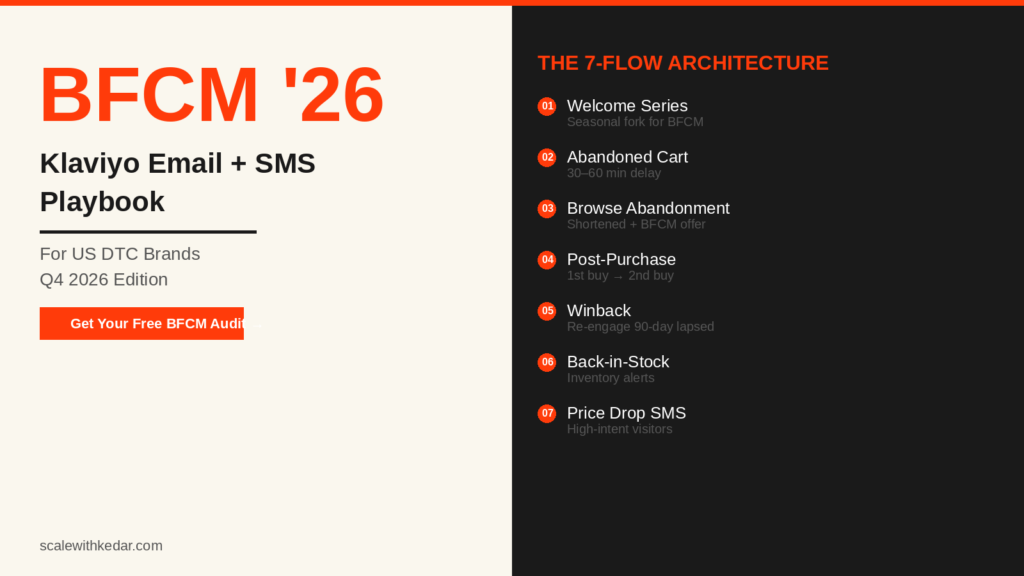
Flows are your evergreen revenue engine. Before you think about campaign calendars, make sure your core automated sequences are working as hard as they should be. The three flows that matter most heading into Q4 are the welcome series, the abandoned cart flow, and the post-purchase flow.
Welcome Series
Your welcome flow is the first impression. It should introduce your brand story, your differentiators, and a reason to buy. A strong welcome series typically runs three to five emails over the first seven to ten days after signup. At minimum, confirm the value of subscribing in email one, introduce social proof such as reviews and press mentions in email two, and give a soft purchase nudge with a time-limited offer in email three.
Before Q4, audit your welcome flow open rates and click rates. If the first email open rate is below 40% or the third email click rate is below 2%, something needs fixing, usually subject lines, send timing, or an offer that is too weak to move people.
Abandoned Cart Flow
Still one of the highest-ROI flows in ecommerce email. Send the first reminder within one hour of abandonment, a second with social proof at 24 hours, and a third with a small incentive at 48 to 72 hours. In Q4, add copy that acknowledges holiday shipping deadlines to create genuine urgency that does not feel manufactured.
Post-Purchase Flow
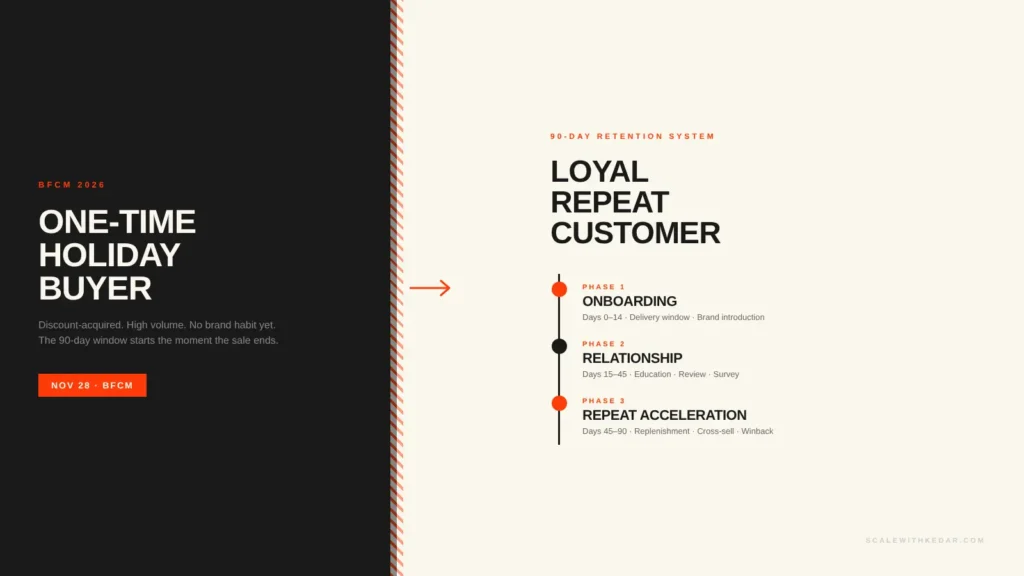
Most DTC brands neglect this flow and leave repeat purchase revenue on the table. A well-built post-purchase flow thanks the customer, sets delivery expectations, requests a review at the right moment, and introduces a complementary product. In Q4, this is where you can give loyal buyers early access to your Black Friday deals, a powerful loyalty gesture that does not require discounting to your entire list.
Phase 3: October — Build Your Q4 Campaign Calendar
The Key Campaign Moments
Do not show up only on Black Friday. US shoppers start holiday browsing much earlier than most brands realise, and the inbox is most crowded on the peak days. Plan campaigns around these windows:
- Early October: Introduce gift guides and bestseller roundups to prime purchase intent.
- Late October: Relevant seasonal campaigns if your product connects to gifting or fall themes.
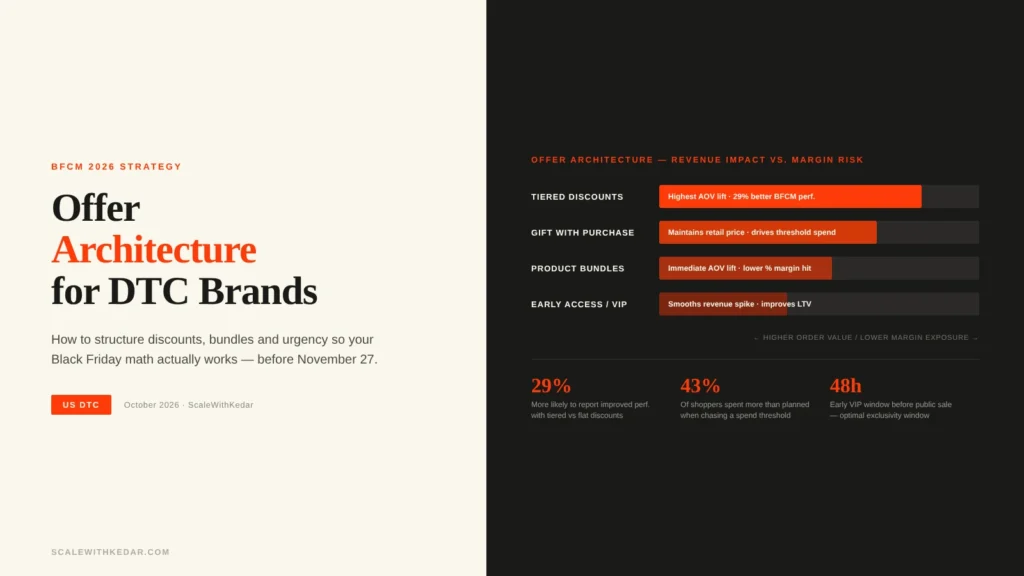
- Early November: Early access for email subscribers so your most loyal audience gets first look before the general public.
- Black Friday week: Send more frequently than usual but vary the angle each day across different products and stories.
- Cyber Monday: Often the strongest day for digitally native brands. Lean into your online-first story.
- December: Shift messaging to shipping deadlines and last-chance gifts. Guaranteed delivery promises are an underused conversion trigger.
Segmentation: Stop Sending to Everyone Every Time
In Q4, segmentation protects deliverability while maximising revenue. A practical framework to apply:
- VIPs: Multi-buyers or high-LTV customers. Give them early access, a personal message, and your best offers.
- Active subscribers: Opened or clicked in the last 30 days. Your core segment for all main campaigns.
- Warm subscribers: Opened or clicked in the last 60 to 90 days. Re-engage them before Black Friday.
- Browse abandoners: Viewed products but did not purchase. Trigger them with dynamic product recommendations.
Phase 4: Deliverability — Protecting Your Inbox Placement
All the strategy in the world is wasted if your emails land in the spam folder. Q4 is when inbox competition is highest and inbox providers are most aggressive about filtering. Key deliverability habits to establish before peak season:
- Authenticate your domain with SPF, DKIM, and DMARC records. Most major email service providers have step-by-step setup guides to walk you through this.
- Warm up any new sending domain or subdomain gradually. Do not jump from a low daily send volume to a large one overnight.
- Monitor your spam complaint rate closely and act quickly if it rises. Staying below your ISP’s published thresholds is essential for sustained deliverability.
- Make unsubscribing easy and visible. A frictionless unsubscribe process reduces spam reports and protects your sending reputation.
How to Measure Q4 Email Performance
Tracking the right metrics matters as much as the campaigns themselves. Watch these KPIs closely in Q4:
- Revenue per email sent: Total email-attributed revenue divided by total emails sent. The clearest measure of programme efficiency.
- Flow vs campaign revenue split: A healthy programme generates meaningful revenue from both automated flows and broadcast campaigns. If you are almost entirely campaign-dependent, your flows need work before Q4.
- List health metrics: Open rate, click rate, and unsubscribe rate tracked weekly. Sharp movements signal problems worth investigating immediately.
Make sure your email platform is integrated correctly with your analytics setup before Q4 begins. Our guide on GA4 revenue attribution for DTC brands covers the integration in practical detail.
Putting It All Together
The DTC brands that win Q4 are not the ones with the largest budgets. They are the ones with the most prepared email programmes. Start list building and cleaning in August and September. Audit and upgrade your core flows in September and October. Build a segmented campaign calendar for November and December. Protect your deliverability throughout so your emails reach the people you have worked to reach.
If you are also reviewing your paid media strategy, our guides on Meta Ads ROAS optimisation for Q4 and the paid media audit framework for DTC brands are the natural next read.
Work With a DTC Growth Strategist
If you would like an experienced eye to review your email strategy or build it from scratch before the holiday rush, I work with US DTC founders on email, paid media, and full-funnel growth. Get in touch and let us talk through what your Q4 email programme actually needs.