
Why US DTC Brands Are Going All-In on AI Right Now
The economics of direct-to-consumer are getting tighter. Customer acquisition costs are up, ad efficiency is inconsistent, and customer expectations keep rising. If you’re running a US DTC brand in 2026 and you’re not using AI to automate at least part of your marketing and operations stack, you’re essentially choosing to be less competitive.
That’s not hype. It’s a structural shift. The brands scaling efficiently right now — the ones hitting better ROAS, lower CAC, and stronger retention — are almost all using AI tools to reduce manual workload while improving precision. This guide covers the most effective AI tools for US DTC brands across paid media, email, customer experience, and operations, plus how to think about building your stack.

1. AI for Paid Media and Ad Creative
Paid media is where most DTC brands are seeing the most immediate return from AI. The two core use cases are creative generation and campaign optimization.
Ad Creative Generation
Jasper AI and Copy.ai are the two most used tools for generating ad copy at scale — headlines, primary text, CTAs, and product descriptions. Both integrate with your brand voice guidelines and can output dozens of variations for A/B testing faster than any copywriting team. For visual creative, tools like Arcads and Creatify generate AI video ads using your product feed and brief, cutting creative production costs significantly for paid social.
Rather than replacing creative strategy, these tools work best when you treat them as velocity engines — your human team sets the positioning and direction, AI generates the volume needed to test fast on Meta and TikTok.
Campaign Optimization
Triple Whale’s Moby AI and Northbeam use AI-driven attribution modelling to surface which channels are actually driving incrementally, not just last-touch credit. For brands spending $50k/month or more on paid media, this kind of cross-channel visibility is essential. If you haven’t run a proper paid media audit before building your AI stack, this paid media audit framework walks through the process.
2. AI for Email and SMS Automation
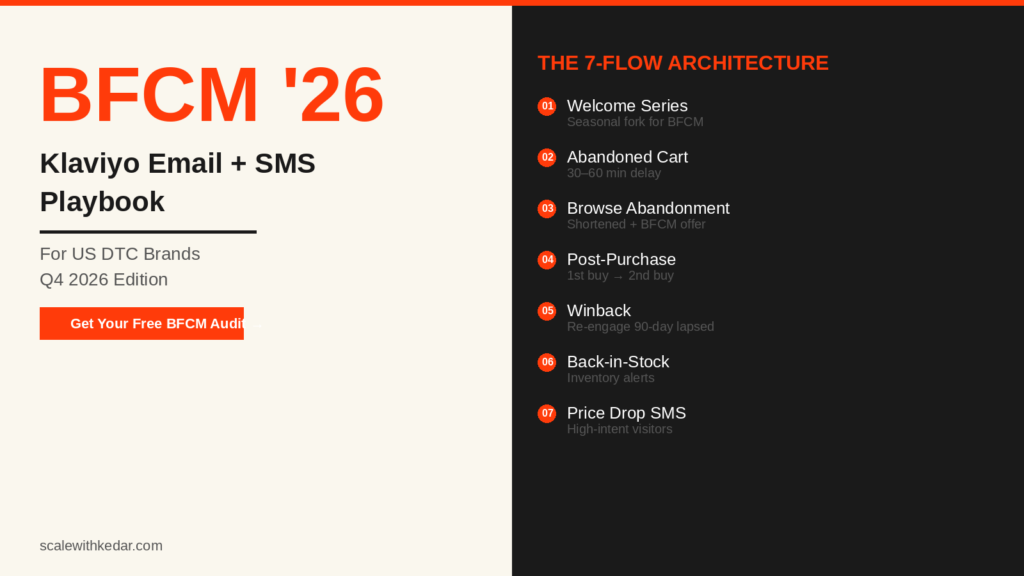
Email is still the highest-ROI channel for DTC brands, and AI is making it significantly more precise. Klaviyo’s AI features — including predictive send-time optimization, churn risk scoring, and AI-generated subject lines — are now standard in most mid-to-large DTC email stacks.
The real unlock is using AI for dynamic segmentation. Instead of building manual segments based on static rules, Klaviyo’s predictive analytics models identify customers likely to purchase in the next 90 days, customers at risk of churning, and high-LTV cohorts — all automatically. For a deeper look at structuring your Klaviyo flows, see this DTC email playbook.
Attentive and Postscript both now include AI-powered SMS personalization features, adjusting message timing and content based on individual customer behaviour. SMS conversion rates for DTC are consistently strong when messages are highly contextual, and AI is what makes contextual messaging scalable.

3. AI for Customer Experience and Support
Customer support is one of the biggest hidden cost centres for growing DTC brands. Gorgias AI is the most established AI customer support tool in the DTC space, built specifically for Shopify brands. It auto-resolves common questions — order status, returns, shipping updates — and escalates complex issues to human agents. Most DTC brands using Gorgias AI report handling 30–50% of tickets automatically without human involvement.
Tidio is a strong option for smaller brands earlier in the growth curve. Its AI chatbot integrates with Shopify and handles pre-purchase questions, product recommendations, and cart recovery conversations. Intercom’s Fin AI is worth evaluating at higher volumes if you want deeper integration with your help centre knowledge base.
For personalization beyond support, Rebuy Engine uses AI to serve product recommendations — upsell, cross-sell, and post-purchase offers — based on real-time purchase behaviour. This kind of contextual personalization on the cart and post-purchase page is where DTC brands are quietly adding meaningful AOV lift without increasing ad spend.
4. AI for Operations and Inventory
Operations is often the last place DTC founders look when thinking about AI, but it’s where some of the highest-impact applications live. Inventory Planner (recently acquired by Cin7) uses AI-driven demand forecasting to optimize purchase orders based on historical trends, seasonality, and supplier lead times. Getting this right prevents both stockouts during peak periods and over-investment in slow-moving SKUs.
Shopify Magic — Shopify’s suite of built-in AI features — now includes AI product descriptions, automated return recommendations, email subject line generation, and AI-powered analytics inside the Shopify admin. If you’re on Shopify, these are worth activating before paying for third-party tools that duplicate the same functionality.
How to Build Your DTC AI Marketing Stack
The mistake most DTC founders make is buying AI tools reactively — adding a tool each time they hear about a pain point — and ending up with an expensive, disconnected stack that nobody uses consistently. A better approach is to map your AI tools to your growth funnel first.
- Top of funnel (acquisition): AI creative generation (Jasper, Arcads), AI-assisted media buying (Meta Advantage+, Google PMax)
- Mid funnel (conversion): AI personalization on-site (Rebuy), AI chat for pre-purchase questions (Tidio, Gorgias)
- Bottom of funnel (retention): AI-powered email and SMS (Klaviyo AI, Attentive), AI loyalty triggers
- Cross-cutting: AI attribution (Triple Whale, Northbeam), AI operations (Inventory Planner, Shopify Magic)
Start with one layer of the funnel where you have the clearest pain point. Nail the integration and measurement before expanding. Most DTC brands see the fastest impact starting with either AI creative (if paid media is a bottleneck) or AI email (if retention is weak).
Before scaling your AI tools investment, it’s also worth reviewing your lifecycle marketing foundation and ensuring your Meta Ads ROAS is optimized — AI tools amplify what’s already working, but they don’t fix fundamental strategic gaps.
What to Prioritise Before Q4
With Q4 approaching, the window to build and test your AI stack is narrowing. The tools that require the most setup time — attribution platforms, AI email models, and customer support automation — need at least 4–6 weeks of historical data before they perform well. If you start building in September, you’ll have a functional, trained stack ready for the holiday peak.
The tools you can implement faster — AI ad creative, Shopify Magic, and AI chatbots — can typically be live and contributing within a week.
Frequently Asked Questions
Do I need a large budget to use AI tools for DTC marketing?
No. Most AI tools have tiered pricing, and options like Shopify Magic are included with your existing Shopify subscription. Start with tools that directly address your biggest bottleneck — often ad creative or email — rather than trying to implement everything at once.
Will AI replace my marketing team?
Researched and compared across the DTC landscape: AI handles volume and repetition, not strategy and creative direction. The most effective DTC teams use AI to move faster on execution while their human team focuses on positioning, messaging strategy, and testing hypotheses.
Which AI tool delivers the fastest ROI for DTC brands?
AI-powered email and SMS personalization (particularly Klaviyo’s predictive features) and AI ad creative generation tend to show measurable impact within the first 30–60 days. Attribution tools take longer to show value but prevent misallocation of spend that can quietly drain growth budgets.
Ready to Build Your AI Growth Stack?
Whether you’re early-stage figuring out your first AI tool or scaling and trying to connect a fragmented stack, the approach matters more than the tools. If you’d like to work through your specific DTC growth challenges — paid media, email, retention, or operations — get in touch to start a conversation.