A winning Klaviyo BFCM strategy for 2026 isn’t built in November — it’s built across the eight weeks before it. The brands that outperform in Q4 have clean lists, functional automated flows, collected SMS consent, and a segmented campaign sequence planned before October ends. This guide covers the exact email and SMS architecture — flows, timing, segment logic, and post-sale retention — that US DTC brands need to run before Black Friday hits.
Why Klaviyo and What Role Email vs. SMS Plays
Klaviyo remains the de facto platform for DTC email and SMS because it unifies both channels in one segment engine — meaning your suppression lists, consent records, and customer profiles stay in sync. That matters during BFCM when you’re sending at volume.
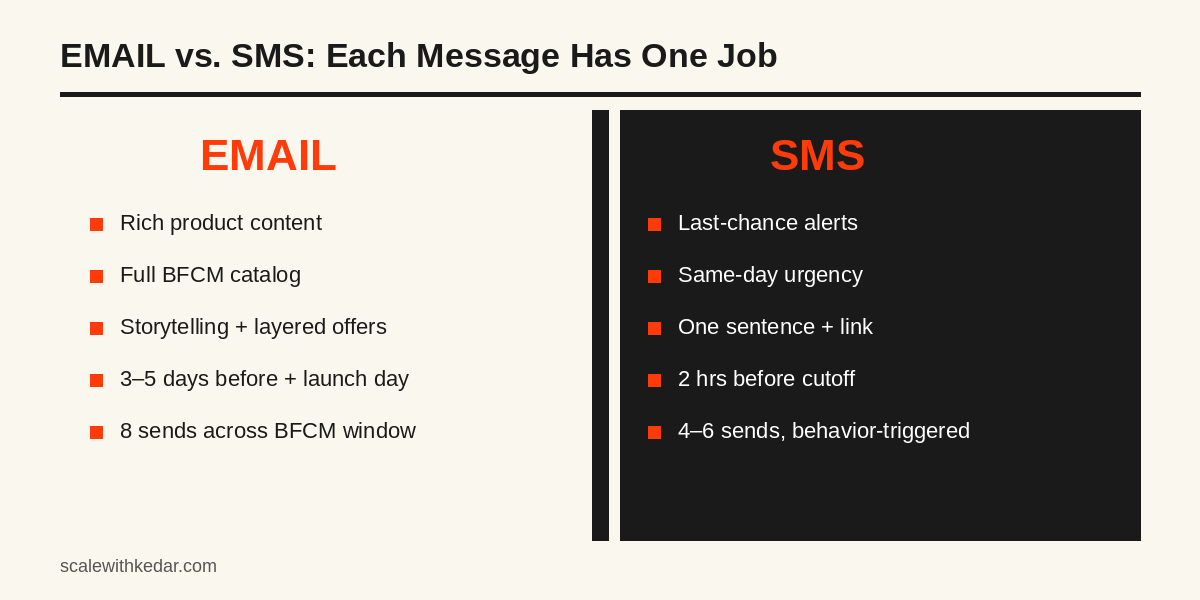
The channel roles are distinct. Email handles rich content: full product catalogs, curated collections, storytelling, and layered offers. SMS handles urgency: last-chance alerts, flash-sale countdowns, and same-day reminders. Klaviyo’s own 2026 BFCM guidance recommends sending a detailed email first, then a same-day SMS reminder to drive action — not simultaneously to the same person at the same minute.
The 8-Week Pre-BFCM Timeline
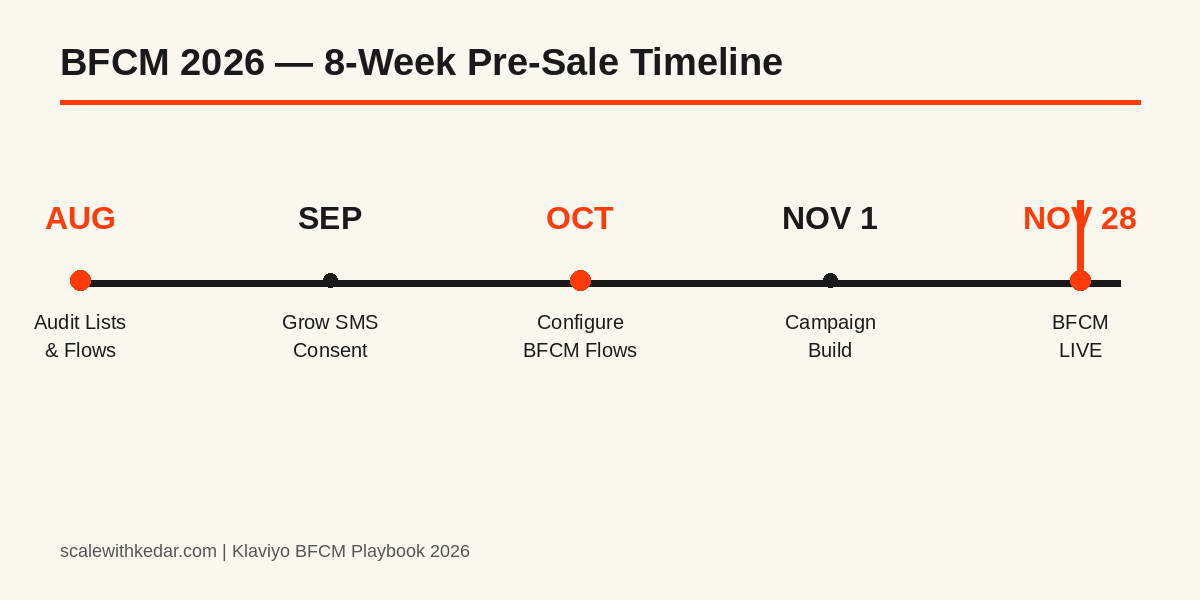
Most brands start this process too late. Klaviyo’s 2026 BFCM checklist recommends a summer-to-October runway.
- August: Audit list and flow health. Suppress unengaged subscribers (no opens in 90–180 days). Check abandoned cart, welcome, and post-purchase flows are firing correctly. Fix broken triggers, stale product blocks, and expired discount codes. This is your baseline.
- September: Grow your SMS list. Add an SMS opt-in step to checkout, pop-ups, and any active campaigns. Klaviyo requires separate SMS consent from email consent — a pre-ticked box doesn’t qualify. List growth can’t be rushed in November; subscribers acquired in September have 6–8 weeks of brand exposure before BFCM.
- October: Configure BFCM-specific flows. Fork your existing abandoned cart, browse abandonment, and welcome flows into BFCM variants. Update discount codes. Set flow filters so BFCM flows fire only during the sale window. Test every flow with a real email address.
- November 1–27: Campaign build and final checks. Draft and schedule campaign emails. Set up SMS campaign sequence. Finalize segments. Audit mobile rendering and load speed on your store.
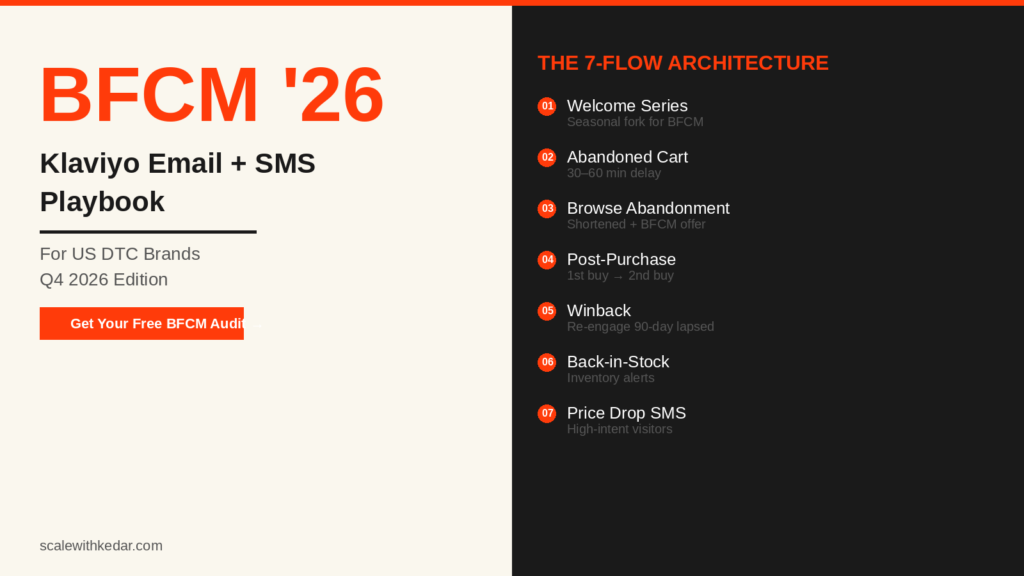
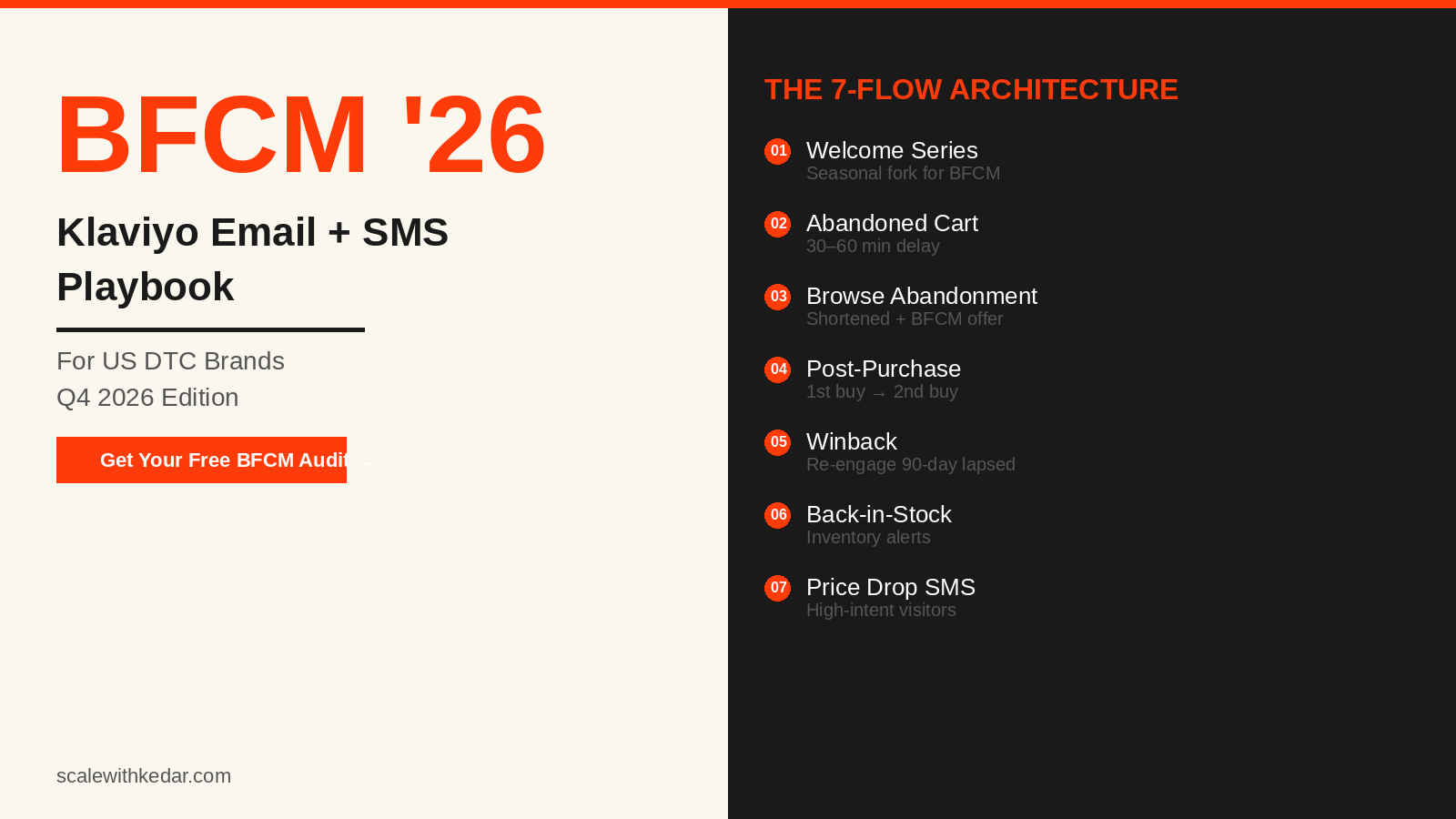
The 7 Essential Flows and BFCM Timing Tweaks
These flows need to be live and modified before BFCM — not built during it.
- Welcome series (forked for BFCM). For the sale period, swap the first email in your welcome series for a seasonal version that introduces your BFCM offer. Route new subscribers from BFCM popups into this fork. After the sale window, return to the evergreen sequence. This avoids sending “welcome” emails that ignore the biggest sale of the year.
- Abandoned cart (shortened delays). Reduce your first abandonment email from the standard 1–4 hours to 30–60 minutes during BFCM. Add urgency messaging and your BFCM offer explicitly. A second reminder at 12–24 hours with a stronger CTA closes the loop. Layer in an SMS reminder at the 2-hour mark for subscribers who’ve given SMS consent.
- Browse abandonment. Shorten delays similarly. Swap generic product recommendations for BFCM-specific messaging. Keep this email short — one product, one CTA.
- Post-purchase flow. Your most underused BFCM asset. Set a flow that triggers after the first BFCM purchase, acknowledges the sale, and introduces the second purchase opportunity. Klaviyo’s guidance emphasizes turning first-time BFCM buyers into repeat buyers in December as the primary post-sale objective.
- Winback/reactivation. Use your pre-BFCM list audit to identify subscribers who haven’t engaged in 90+ days. A targeted BFCM offer to this segment before the general campaign launch reactivates some, and lets you suppress the rest to protect deliverability.
- Back-in-stock. If you’re managing inventory for BFCM bundles or limited items, have this flow ready. Set it to suppress anyone who already purchased that item.
- Price drop alerts (SMS). For subscribers who’ve browsed a product more than once without purchasing, a price drop SMS on Black Friday morning can convert high-intent visitors. Keep it to one send per product per subscriber.
The BFCM Campaign Sequence: 8 Emails + 4–6 Texts
A practical send plan based on Klaviyo’s 2026 recommendations — each send has one job:
- Email 1 (1–2 weeks before): Early access teaser to your VIP or email list. Builds anticipation. No discount yet.
- Email 2 (3–5 days before): Early access or preview for engaged subscribers. Introduce the offer.
- SMS 1 (Black Friday morning): Sale is live. Link directly to the sale landing page. Short — one sentence + link.
- Email 3 (Black Friday launch): Full catalog send. Feature your top products, clear discount, expiry date visible.
- Email 4 (Black Friday evening): “In case you missed it” re-send to non-openers of Email 3. Change subject line only.
- SMS 2 (Saturday): Reminder with remaining sale window. Keep under 160 characters.
- Email 5 (Sunday/Cyber Sunday): Extended sale or Cyber Monday preview. Segmented for non-purchasers only.
- SMS 3 (Cyber Monday morning): Cyber Monday is live (if you’re extending the sale). Direct product link.
- Email 6 (Cyber Monday): Cyber Monday main send. Different hero product or bundle from BFCM email.
- Email 7 (Last chance): Sale ends in X hours. Suppress recent purchasers.
- SMS 4–6: Cart abandonment nudges during the sale window, triggered by behavior — not blasted to full list.
Critical rule: never send an SMS and email to the same person in the same minute. Klaviyo’s channel rules let you enforce this at the flow and campaign level.
Segment Hygiene and Suppression
High send volume during BFCM damages deliverability if your list isn’t clean. Before the sale window opens:
- Suppress all subscribers who haven’t opened an email in 180+ days (adjust based on your list age).
- Create a “BFCM engaged” segment: opened or clicked in the last 90 days. Use this as your primary campaign target.
- Monitor overlap between your email and SMS lists. Subscribers in both need controlled sequencing — set Klaviyo’s smart sending to prevent duplicate sends within a time window.
- After the sale, move BFCM-only purchasers into a dedicated post-purchase flow. Don’t mix them immediately into your general list without a deliberate transition sequence.
Post-BFCM: December Retention Playbook
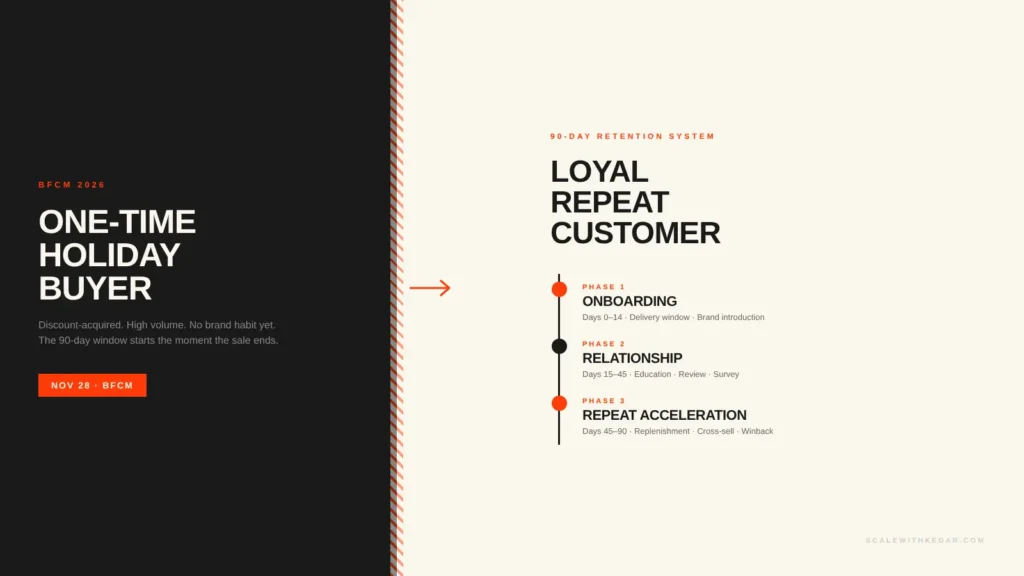
The sale is not the objective — lifetime value is. Klaviyo’s 2026 guidance identifies December as the highest-leverage window for turning BFCM first-time buyers into second purchases.
- Trigger a post-purchase flow for all BFCM buyers 7–10 days after purchase, when they’ve had time to receive and use their order.
- Introduce your loyalty program or points system in this window if you have one.
- SMS reactivation for BFCM SMS subscribers who didn’t purchase: send a “still thinking?” message with a secondary offer in early December.
- Suppress BFCM purchasers from broad holiday emails unless you have a distinct new offer — don’t bombard recent buyers.
Is your Klaviyo setup ready for Q4?
A 30-minute free audit covers your flow architecture, list health, SMS setup, and BFCM readiness — specific to your store and revenue stage.
FAQ
When should I start sending BFCM emails — is two weeks before too early?
For your engaged VIP or email list, a teaser 10–14 days before Black Friday is appropriate and expected. A broad promotional send to your full list more than 7 days before tends to desensitize subscribers and reduce open rates on your main launch day. Klaviyo’s guidance recommends segmenting early-access emails to your highest-engagement tier only.
Do I need to collect SMS consent separately from email consent?
Yes. In the US, TCPA requires separate, explicit consent for SMS marketing — a pre-checked opt-in at checkout that includes SMS doesn’t meet the standard if the subscriber only intended to give their email. Klaviyo’s forms let you collect SMS and email consent with separate checkboxes. Review TCPA compliance requirements and your legal team’s guidance before sending promotional SMS at scale.
Which flow should I build first if I’m starting from scratch in October?
Abandoned cart is the highest-ROI flow for most DTC brands and the most urgent to have functional before BFCM. If you only have time to build and test one flow before November, start there. The second priority is a post-purchase flow — capturing BFCM buyers for December repeat purchases is where the long-term value is. The welcome series and browse abandonment follow in priority order.