Most D2C brands in India pour money into acquiring new customers — Meta Ads, Google Ads, influencer campaigns. But here is the hard truth: if you treat every customer the same after the first purchase, you are leaving serious money on the table. The brands that scale sustainably in India are the ones that understand who their best customers are, who is about to churn, and who needs a nudge to come back.
That is exactly what the RFM model helps you do. RFM — Recency, Frequency, Monetary — is a proven customer segmentation framework used by the world’s biggest e-commerce brands. And the best part? You can implement it for your Indian D2C brand without expensive software or a data science team.
What Is RFM and Why Does It Matter for Indian D2C Brands?
RFM stands for three simple but powerful dimensions of customer behaviour:
- Recency (R): How recently did a customer make a purchase? A customer who bought last week is far more likely to buy again than one who bought six months ago.
- Frequency (F): How many times has a customer purchased from you? Repeat buyers signal trust in your brand.
- Monetary (M): How much has a customer spent in total? High-value customers deserve VIP treatment.
For Indian D2C brands, where the cost of new customer acquisition is rising sharply on Meta and Google, activating existing customers through RFM-driven campaigns can deliver a significantly better return on marketing spend. Retention is the growth lever most brands underuse.
How to Calculate RFM Scores for Your D2C Brand
Step 1 — Export Your Customer Purchase Data
Start by pulling your complete order history from Shopify, WooCommerce, or whatever platform you use. You need three columns per customer: customer ID, order date, and order value. Most platforms let you export this as a CSV. If you are running on Shopify, go to Analytics → Reports → Customers over time and export the raw data.
Step 2 — Score Each Dimension on a 1 to 5 Scale
Once you have your data in a spreadsheet, score each customer on a scale of 1 to 5 for each dimension:
- Recency: Bought in last 30 days → 5. 31–60 days → 4. 61–90 days → 3. 91–180 days → 2. Over 180 days → 1.
- Frequency: 5+ purchases → 5. 4 purchases → 4. 3 purchases → 3. 2 purchases → 2. 1 purchase → 1.
- Monetary: Divide customers into five equal groups based on total spend, assigning 5 to the top 20% and 1 to the bottom 20%.
Each customer now has a three-digit RFM score, like 5-4-3 or 2-1-1. A score of 5-5-5 is your champion; 1-1-1 is a ghost you may never win back.
Step 3 — Group Customers into Actionable Segments
Rather than working with hundreds of individual score combinations, group them into six actionable segments:
- Champions (R:5, F:4–5, M:4–5): Your best buyers — frequent, recent, high-value.
- Loyal Customers (R:3–5, F:3–5, M:3–5): Reliable repeat buyers with strong potential.
- Potential Loyalists (R:4–5, F:1–2, M:1–3): Recent buyers who have only purchased once or twice.
- At-Risk Customers (R:2–3, F:3–5, M:3–5): Previously strong customers who are going quiet.
- Lapsed Customers (R:1–2, F:1–2, M:1–2): Long-gone, low-spend customers.
- New Customers (R:4–5, F:1, M:1–2): Made their first purchase recently.
How to Activate Each Segment with Targeted Campaigns
Champions: Reward and Leverage
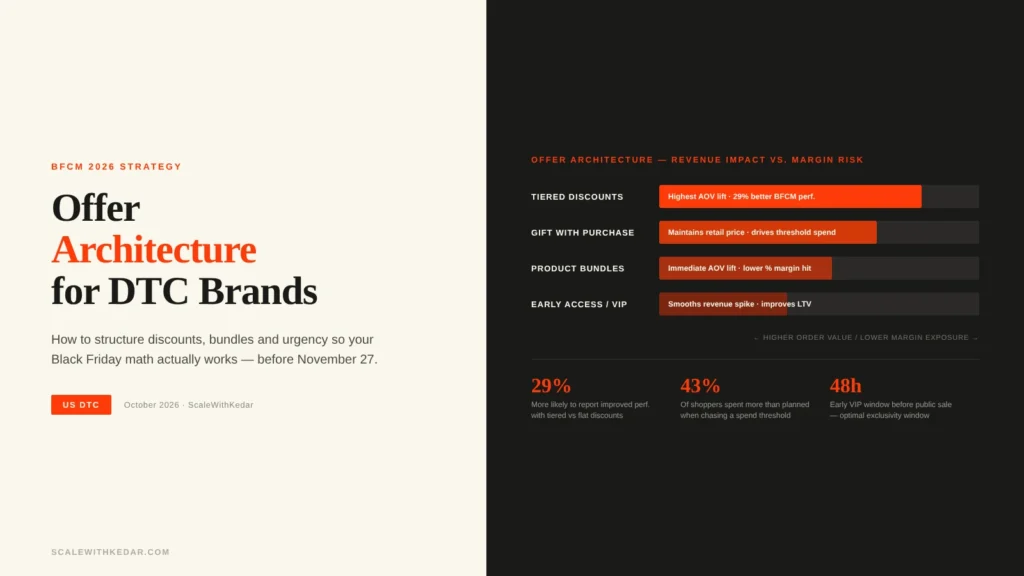
Your champions are your brand advocates. Give them early access to new launches, invite them to a WhatsApp VIP group, and offer an exclusive loyalty tier. Ask them for reviews and UGC. An early access message — “You are one of our 50 VIP customers, here is your exclusive preview” — performs extremely well for Indian D2C brands.
At-Risk Customers: Win-Back Fast
Time is critical here. Send a win-back campaign the moment a strong customer goes quiet. Use subject lines like “We miss you — here is Rs 150 off your next order” or offer free shipping to remove purchase friction. For higher-value at-risk customers, a personalised WhatsApp message from the brand founder can perform remarkably well in the Indian context.
New Customers: Nail the Onboarding Sequence
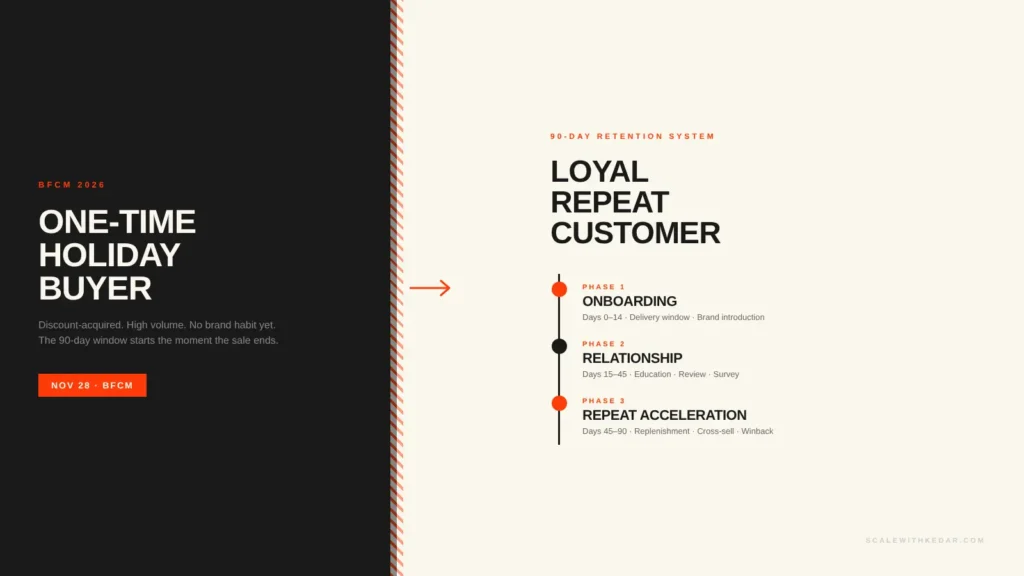
The first 30 days after a first purchase are critical. Send a welcome sequence: day 1 (thank you plus usage tips), day 7 (social proof and reviews), day 20 (personalised second-purchase nudge). Most Indian D2C brands skip this entirely and then wonder why repeat purchase rates are low.
Loyal Customers: Upsell and Cross-Sell
These customers trust you. Send personalised product recommendations based on purchase history. A well-timed message — “We thought you would love this, based on your last order” — can drive strong incremental revenue. Bundle offers and combo packs also work well here.
Tools to Run RFM Analysis for Your D2C Brand in India
You do not need enterprise software to start. Here are your options at different scales:
- Google Sheets: For under 5,000 customers, a manual RFM analysis in Google Sheets is perfectly viable. Use PERCENTILE formulas to create quintile buckets.
- Klaviyo: If you use Shopify, Klaviyo has built-in predictive segments that approximate RFM. Their Predicted CLV and Expected Next Order Date features make segmentation straightforward.
- WebEngage / MoEngage: Both are popular among Indian D2C brands and support custom RFM scoring with cross-channel automation — email, WhatsApp, SMS, and push notifications.
- Wigzo: Another solid option for Indian brands looking for an affordable RFM-based marketing automation tool.
Start Small and Scale as You Learn
You do not need to implement RFM perfectly on day one. Begin with just three segments — Champions, At-Risk, and New Customers. Build one targeted campaign for each. Measure repeat purchase rate and revenue per campaign over 60 days. Once you see the results, expand to all six segments and automate your win-back and loyalty flows.
RFM is not just a data exercise — it is a mindset shift. Instead of broadcasting the same message to every customer, you start having the right conversation with the right person at the right time. For Indian D2C brands competing in an increasingly crowded market, that precision is a genuine competitive advantage.