If you’re running a D2C brand in India and you’re only watching ROAS and cost-per-order, you’re optimising for the wrong thing. The brands that win long-term — on Meta Ads, on Shopify, on quick commerce — are the ones that understand Customer Lifetime Value (CLV or LTV) deeply and build their entire acquisition, retention, and product strategy around it.
I’ve worked with multiple Indian D2C brands across beauty, food, and fashion, and the pattern is consistent: brands that calculate and actively improve CLV can afford to scale their paid spend aggressively, while brands that ignore it end up stuck in a profitability trap where every new customer barely covers their CAC.
In this guide, I’ll break down exactly what CLV means for an Indian D2C context, how to calculate it, and — most importantly — five strategies that actually move the number.
What Is Customer Lifetime Value (CLV) and Why It Matters for Indian D2C Brands
Customer Lifetime Value is the total revenue (or profit) a single customer generates across their entire relationship with your brand. It sounds like a simple metric, but the implications are massive for how you run paid media, plan product launches, and allocate your retention budget.
Here’s why CLV matters so much right now in India: customer acquisition costs (CAC) are rising across the board. Meta CPMs have increased significantly over the past two years, Google CPCs are climbing, and quick commerce listing and shelf fees are eating into margins. The only sustainable response is to make every customer you acquire worth more — and to know exactly what that worth is before you decide how much to spend acquiring them.
When you have a clear CLV number, you can answer questions like: Can I afford to run Meta Ads targeting a broader audience if my CAC goes up to ₹900? Should I launch a loyalty programme that costs ₹120 per customer to run? Should I run a 20% retention offer? All of these become data-driven decisions instead of gut calls.
How to Calculate CLV: The Formula Your D2C Brand Needs
There are a few versions of the CLV formula. Here’s the one I find most practical for Indian D2C brands at the growth stage:
CLV = Average Order Value (AOV) × Purchase Frequency × Customer Lifespan
Let’s plug in some numbers. Say your brand sells organic skincare products:
- AOV: ₹1,200
- Purchase Frequency: 3.5 times per year
- Average Customer Lifespan: 2 years
Your CLV = ₹1,200 × 3.5 × 2 = ₹8,400
Now, if your gross margin is 55%, your Gross Profit CLV is ₹4,620. That’s the number you actually use when deciding how much you can afford to acquire a customer profitably.
To run this calculation accurately, you need to track the following in your analytics stack:
- AOV by cohort: Do customers acquired through Meta spend differently than customers acquired through organic search?
- Time between orders: What’s the median gap between first and second purchase? (This defines your replenishment window)
- Churn point: At what point do customers stop buying? For most Indian D2C brands, the churn window is 90–120 days after the last order.
5 Proven Strategies to Improve CLV for Your Indian D2C Brand
Knowing your CLV number is step one. Improving it is where the real work happens. Here are five strategies that consistently move the needle:
1. Build a Post-Purchase Retention Flow That Actually Works
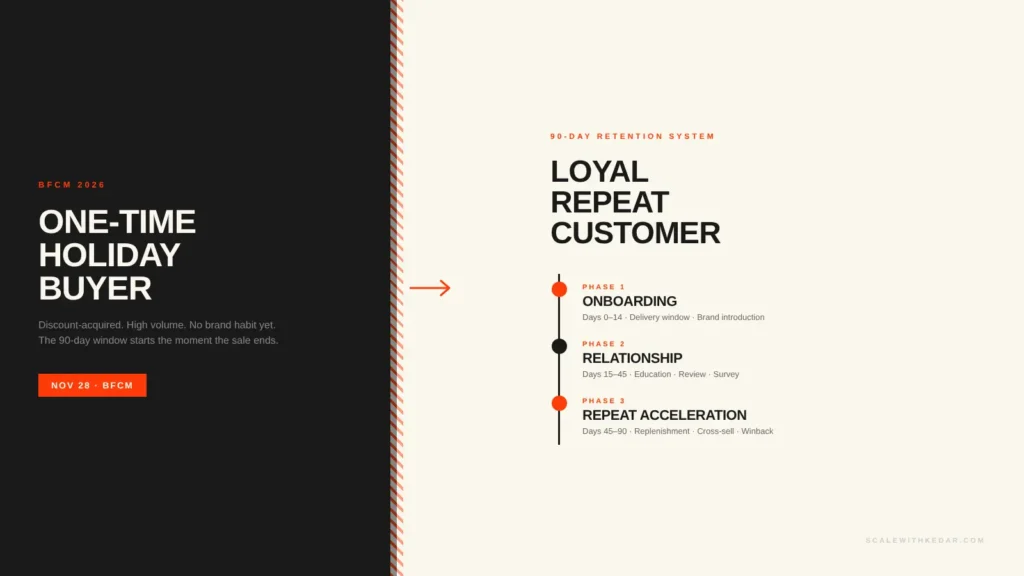
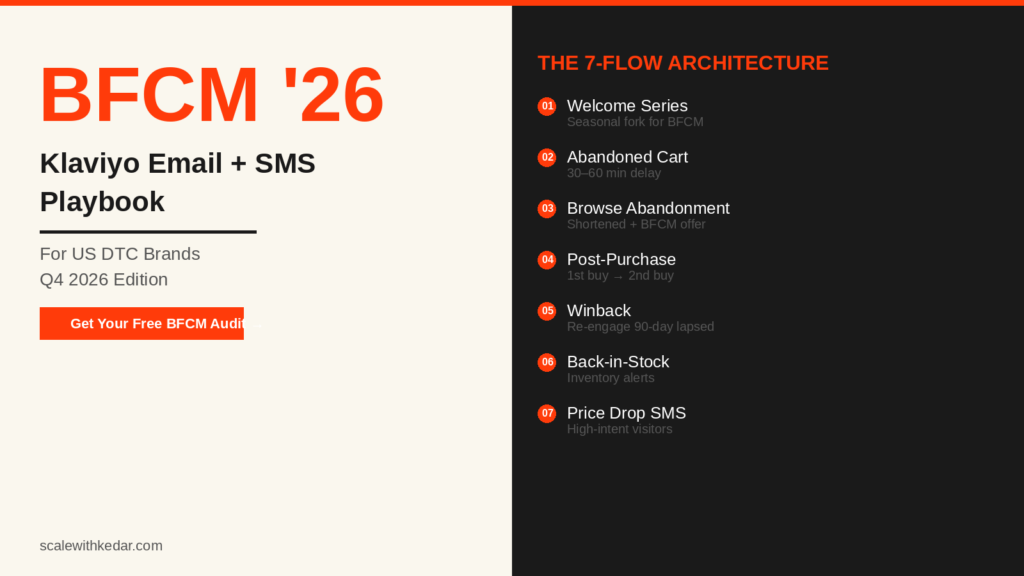
Most D2C brands invest heavily in getting the first order and then do almost nothing to retain that customer. A structured post-purchase sequence — across WhatsApp, email, and SMS — is your single biggest CLV lever and it’s almost always the most underinvested channel.
A sequence that works well for Indian brands: Day 1 (order confirmation + brand story), Day 3 (product tips and usage guide), Day 14 (check-in + review request), Day 25 (replenishment reminder with a personalised discount), Day 45 (cross-sell recommendation based on purchase history). This alone can increase your 90-day repurchase rate by a meaningful margin.
2. Implement a Loyalty Programme That Feels Achievable
You don’t need a complex points system. Even a basic “buy 5, get 10% off your next order” programme increases repeat purchase rates when it’s communicated clearly at checkout and in post-purchase messaging. Platforms like LoyaltyLion, Yotpo, and even Shopify’s built-in options make this relatively quick to set up. The critical design principle: make the reward feel achievable within 60–90 days, not 12 months.
3. Use RFM Segmentation to Prioritise Your Best Customers
RFM stands for Recency, Frequency, Monetary — and it’s one of the most powerful frameworks for understanding your customer base without complex machine learning. Segment your customers into: Champions (bought recently, buy often, high spend), Loyal Customers (buy regularly but spend average amounts), At-Risk (haven’t bought in 60+ days), and Lost (no purchase in 120+ days).
The key is to treat each group differently. Champions get early access to new launches. At-Risk customers get a time-sensitive win-back offer on WhatsApp. Lost customers get one last re-engagement campaign — if they don’t respond, stop spending on them and focus resources on higher-value segments.
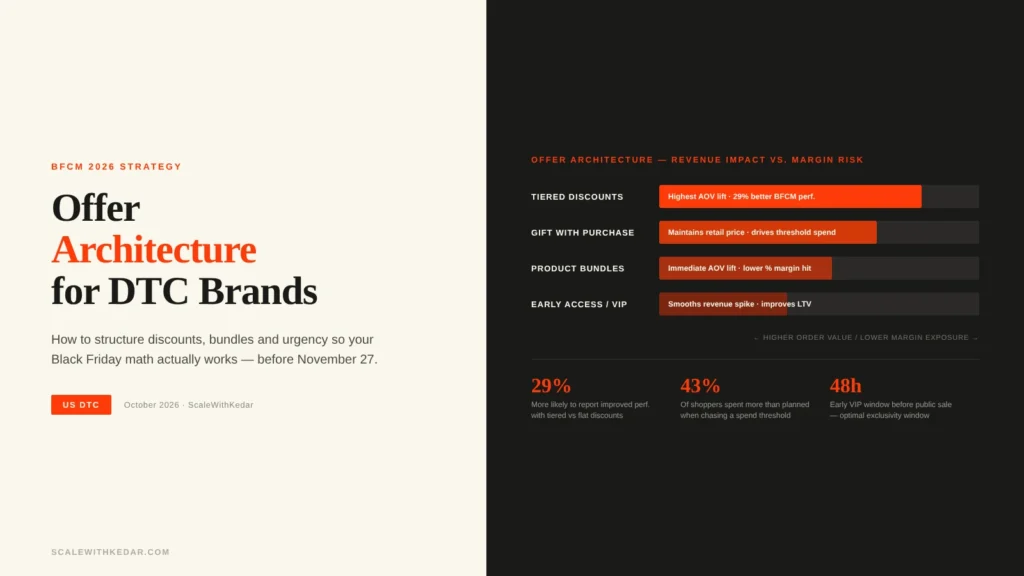
4. Increase Average Order Value with Smart Product Bundling
Every ₹100 increase in AOV directly multiplies your CLV across the customer’s lifetime. Bundling is particularly effective in Indian market categories like personal care, food and nutrition, and home products. Instead of selling a single moisturiser, offer a “Morning Glow Kit” — cleanser + moisturiser + SPF at a small discount to the combined MRP. The perceived value is higher, the cart value jumps, and you’ve introduced customers to multiple products in the same order, which increases the chance they repurchase at least one of them.

5. Personalise Your Cross-Sell Flows Based on Purchase History
Generic cross-sells (“you might also like these products”) have poor conversion because they’re not grounded in what the customer actually bought. Personalised recommendations based on real purchase history — powered by tools like Klaviyo, WebEngage, or MoEngage — can lift repeat purchase revenue significantly. The logic is simple: if someone bought a hair serum, they’re a candidate for a scalp oil or a deep conditioning mask, not a body lotion.
How CLV Changes Your Meta Ads Strategy
Here’s a practical implication that many founders overlook: when you know your CLV is ₹8,400 with a gross profit CLV of ₹4,620, you can afford to run Meta Ads with a higher target CAC than a competitor who hasn’t done this calculation. If your competitor thinks ₹500 CAC is the ceiling, but you know your 2-year CLV supports a ₹1,200 CAC and still leaves you profitable, you can outbid them for the same audience and win customers they’re leaving on the table.
This is exactly how mid-size Indian D2C brands with strong retention systems are able to compete with much larger brands on Meta Ads — not by spending more for the sake of it, but by having the data confidence to know that higher acquisition costs are sustainable over a long enough time horizon.
Tracking CLV: Which Tools Work Best for Indian D2C Brands
The right tool depends on your monthly revenue and the depth of analysis you need:
- Early stage (under ₹50L/month): Shopify’s built-in customer analytics, GA4 cohort analysis, and simple Excel/Sheets models work fine
- Growth stage (₹50L–₹2Cr/month): Klaviyo or WebEngage for retention flows, Northbeam or Triple Whale for multi-touch attribution, and proper CLV cohort tracking by acquisition channel
- Scale stage (₹2Cr+/month): MoEngage or CleverTap for full CRM orchestration, combined with a data warehouse (BigQuery or Redshift) for custom CLV modelling by product line, channel, and geography
Final Thoughts: CLV Is a Growth Strategy, Not Just a Metric
Here’s the mindset shift worth internalising: CLV is not something you calculate once to impress investors. It’s the lens through which every marketing, product, and pricing decision should be made.
Should you add a new SKU? Ask: will it increase AOV or purchase frequency for existing customers? Should you run a 30% sitewide discount? Ask: does this attract high-CLV buyers or one-time bargain hunters who never come back? Should you expand to a new geography? Ask: what does your current CLV look like in markets you’ve already served for 18+ months?
Indian D2C brands that build CLV thinking into their operating rhythm — even with imperfect data at the start — will consistently outperform those chasing the cheapest possible CAC. Start with the numbers you have, build better retention habits one quarter at a time, and watch the compound effect kick in over 12–18 months.