If you’re running a DTC brand and email is still “something you get to eventually,” this is the year to fix that. Klaviyo has become the go-to email platform for US ecommerce brands precisely because it goes beyond blast campaigns — its flow system lets you automate high-intent conversations with customers at exactly the right moment.
This guide walks you through the five email flows every DTC brand should have live in Klaviyo, how to set them up, and what metrics to watch. No fluff — just a practical playbook based on researched best practices from Klaviyo’s own documentation and DTC industry benchmarks.

What Are Klaviyo Flows (and Why They Beat Campaigns)?
Campaigns are one-time sends you schedule manually — a product launch, a flash sale, a holiday push. Flows are automated sequences triggered by customer behaviour: someone joins your list, abandons a cart, or hasn’t bought in 90 days. The difference in ROI is dramatic. Industry research consistently shows that automated flows generate the majority of email revenue for DTC brands while requiring a fraction of the ongoing effort.
Klaviyo’s flow builder is visual and trigger-based. You set a trigger (event, list membership, date), add conditions (has purchased, lives in a specific state, clicked a specific link), and build a sequence of emails and time delays. Once it’s live, it runs 24/7 without your involvement.
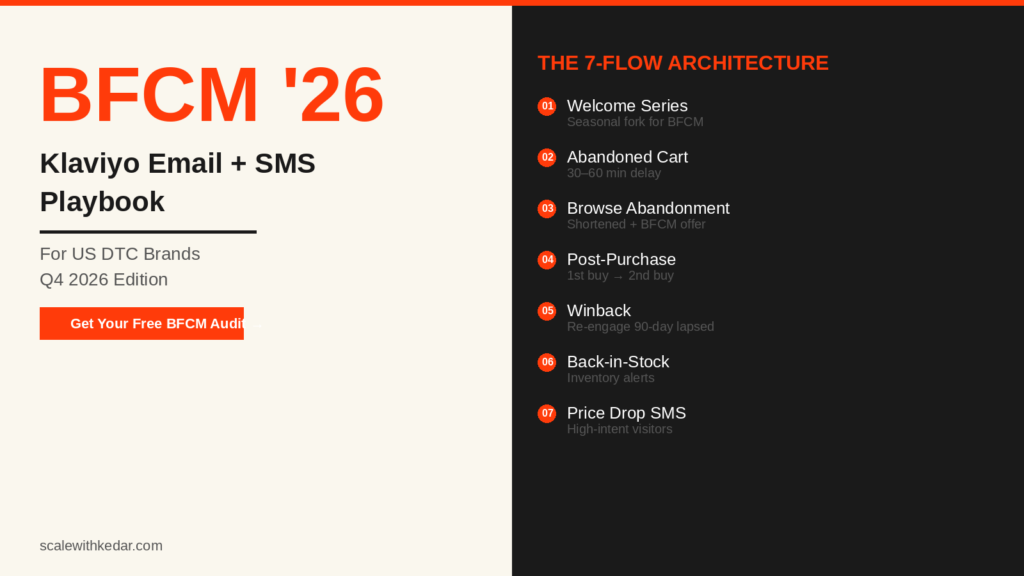
The 5 Essential Klaviyo Flows for DTC Brands
1. Welcome Series (3–5 Emails)
Your welcome series is your brand’s handshake — it sets the tone for the entire customer relationship. Trigger it when someone joins your list (via a popup, landing page, or checkout opt-in). According to Klaviyo’s own benchmark data, welcome emails have the highest open rates of any automated flow.
Recommended structure:
- Email 1 (immediate): Deliver the signup incentive (if any), introduce your brand story, and set expectations for what’s coming.
- Email 2 (Day 2): Highlight your bestseller or most-reviewed product. Focus on the outcome it delivers, not just the features.
- Email 3 (Day 4): Share social proof — customer stories, UGC, or press mentions. Build trust before the hard sell.
- Email 4 (Day 7): Address the most common objection for your category. If you sell supplements, talk about sourcing. If you sell apparel, show size guides and return policy.
- Email 5 (Day 10): Final nudge — your best offer or a sense of limited time on the welcome discount.
Key setup tip: Add a conditional split after Email 1. If someone purchased, remove them from the welcome series and move them to your post-purchase flow. No one wants promotional emails about a product they just bought.
2. Abandoned Cart Flow (3 Emails)
This is the highest-revenue flow for most DTC brands. Someone adds to cart, doesn’t check out, and you have a real purchase intent signal to work with. Klaviyo’s “Checkout Started” metric is the trigger you want — it fires when someone enters the checkout but doesn’t complete it.
Recommended structure:
- Email 1 (1 hour after abandonment): Simple reminder with their cart contents. Make it easy to return — one prominent button, their items shown visually.
- Email 2 (24 hours): Add social proof specific to the products in their cart. Reviews, UGC, FAQs about the most common concerns.
- Email 3 (48–72 hours): A gentle incentive — free shipping, a small discount, or a “we’re holding this for you” message. Don’t train customers to always wait for a coupon; test whether an incentive is actually necessary for your brand.
Use Klaviyo’s dynamic blocks to show the exact cart contents in every email — it’s a native feature that dramatically improves clicks.
3. Browse Abandonment Flow (1–2 Emails)
Browse abandonment targets shoppers who viewed a product but didn’t add to cart. It’s a softer signal than cart abandonment, so your messaging should match. This flow works best for higher-consideration products (anything over $50) where customers typically research before buying.
Recommended structure:
- Email 1 (4–6 hours after browse): Reference the specific product they viewed. Add editorial context — “Why customers choose this” or “How it compares to our other options.” Keep it consultative.
- Email 2 (optional, 24 hours): Send only if they didn’t open Email 1. Include related products and a soft CTA.
Setup note: In Klaviyo, use the “Viewed Product” metric as your trigger. Add a trigger filter so the flow only fires if the person did NOT start checkout — otherwise you’ll overlap with your abandoned cart flow.

4. Post-Purchase Flow (3–5 Emails)
Your post-purchase flow is where LTV is built. Most brands stop at an order confirmation and miss a massive opportunity. A well-designed post-purchase sequence does three things: it reduces buyer’s remorse (improving satisfaction and reducing returns), encourages a second purchase, and generates reviews and UGC.
Recommended structure:
- Email 1 (immediate): Order confirmation + excitement building. Not just a receipt — tell customers what to expect, when it ships, and why they made a great choice.
- Email 2 (Day 3–5, after shipping): A “getting the most out of your purchase” guide. How-to tips, care instructions, recipe ideas, use cases — whatever fits your product.
- Email 3 (Day 10–14, after expected delivery): Ask for a review. Make it effortless — link directly to your review form. Offer a small thank-you (discount on next order) in exchange.
- Email 4 (Day 21–30): A cross-sell or replenishment recommendation. If someone bought a face cleanser, this is where you recommend the matching toner. Segment by what they bought using Klaviyo’s product categories.
- Email 5 (Day 45–60): A replenishment reminder if your product has a predictable usage cycle. Personalise the timing to match actual average usage — Klaviyo’s predictive analytics can help estimate this.
5. Win-Back Flow (2–3 Emails)
Every list has churned customers — people who bought once (or twice) and went quiet. A win-back flow targets customers who haven’t opened an email or purchased in 90–180 days. The goal is to either re-engage them or suppress them (so they don’t hurt your deliverability).
Recommended structure:
- Email 1 (Day 90 of inactivity): “We miss you” — a brand update, new product, or genuine check-in. No heavy selling. Subject line matters most here; A/B test it.
- Email 2 (Day 105): Your best offer — a meaningful discount, a free gift with purchase, or exclusive access to something new.
- Email 3 (Day 120): The sunset email. “If you want to stay on our list, click here.” This is actually good for deliverability — anyone who doesn’t engage gets suppressed, keeping your list clean and your sender reputation strong.
Measuring Flow Performance: The Metrics That Matter
Once your flows are live, don’t just let them run and forget. Review performance monthly:
- Flow revenue per recipient: The revenue each email generates per person it’s sent to. Benchmark against Klaviyo’s industry averages for your vertical.
- Open rate: A signal of subject line quality and list health. Below 25% in 2026 suggests deliverability or relevance issues.
- Click-to-open rate (CTOR): How many openers clicked. This measures the quality of your email content and CTA — aim for 10–15%.
- Conversion rate per email: Revenue-driving emails should track actual purchases, not just clicks. Klaviyo attributes conversions via a last-touch model by default — understand that limitation when reporting.
- Unsubscribe rate per flow: If a specific flow has a high unsubscribe rate, your timing or messaging is off. Adjust frequency or content before blaming the channel.
Quick Setup Checklist Before You Go Live
- ✅ Klaviyo tracking script installed on your store (Shopify plugin or manual JS)
- ✅ “Active on site” and “Viewed Product” metrics confirmed firing in Klaviyo’s metrics tab
- ✅ Double opt-in configured (or single opt-in with suppression logic for hard-bounced addresses)
- ✅ Sending domain authenticated (SPF, DKIM, DMARC) — non-negotiable in 2026 for inbox placement
- ✅ Flow filters set to exclude recent purchasers from promotional flows
- ✅ A/B tests configured on subject lines for your welcome and cart flows
Building on Your Flows: What’s Next
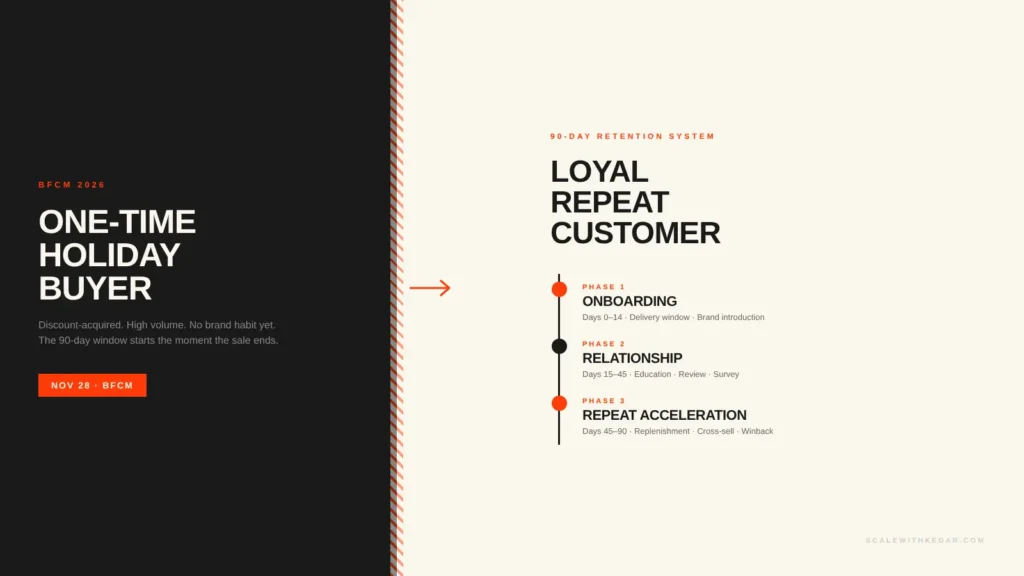
Once your core five flows are live and generating consistent revenue, the next layer is segmentation. Klaviyo’s segment builder lets you get granular — VIP customers (top 20% of buyers by LTV), repeat purchasers, customers who’ve bought a specific product line, and subscribers who’ve never purchased. Each segment can get a tailored version of your flows, or exclusive campaigns, improving relevance and reducing list fatigue.
Email is also just one channel in the stack. If you’re running paid media to drive new customers, consider how your Meta Ads strategy and your email flows work together — your welcome series should reinforce the same messaging your paid ads are using. And if you’re building towards Q4, your Q4 email playbook needs to sit on top of a solid automated foundation first.
For a deeper look at attribution — understanding how your email flows are actually contributing to revenue — the GA4 attribution guide for DTC brands is worth reading alongside this one. And if you want to understand how email fits into the full customer lifecycle, start with DTC lifecycle marketing.
Ready to Build Flows That Actually Convert?
Setting up Klaviyo flows correctly takes a few hours of focused work — getting your triggers right, writing copy that sounds human, and testing the sequences end-to-end. Most DTC founders either never get it done or set it up once and never revisit it. If you want a second opinion on your existing flows, or want help building a Klaviyo strategy that connects to your paid media and CRO work, get in touch here.