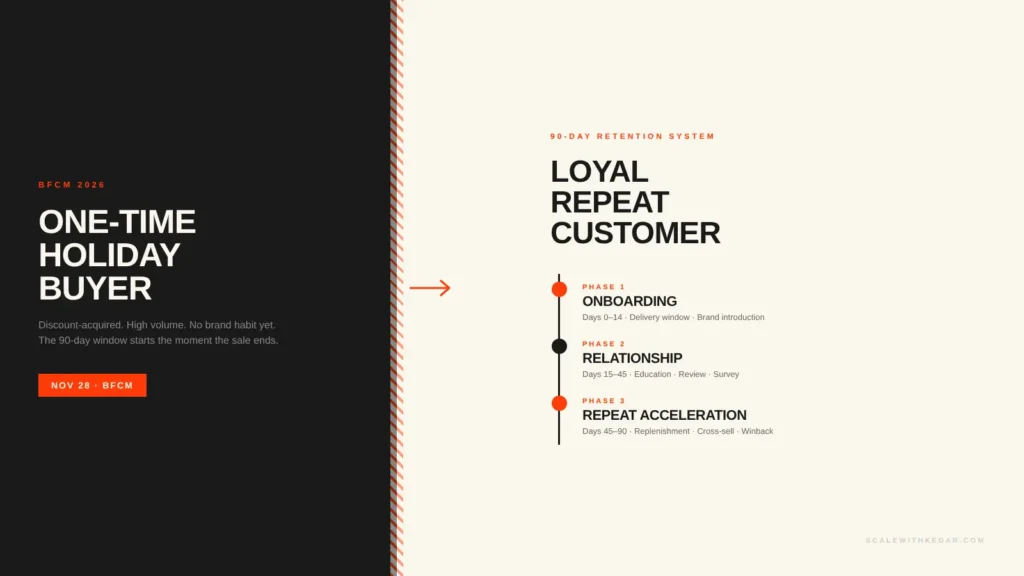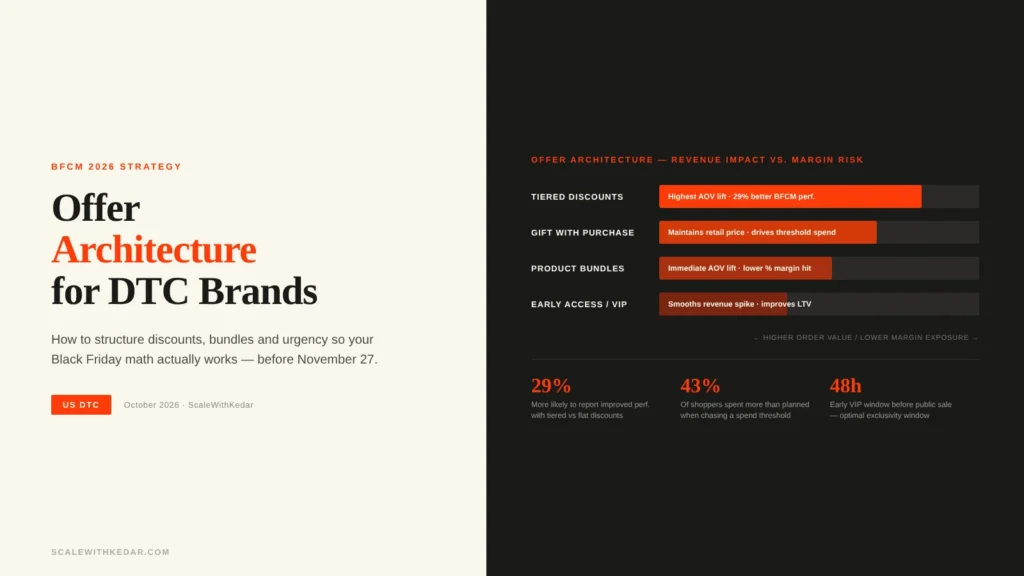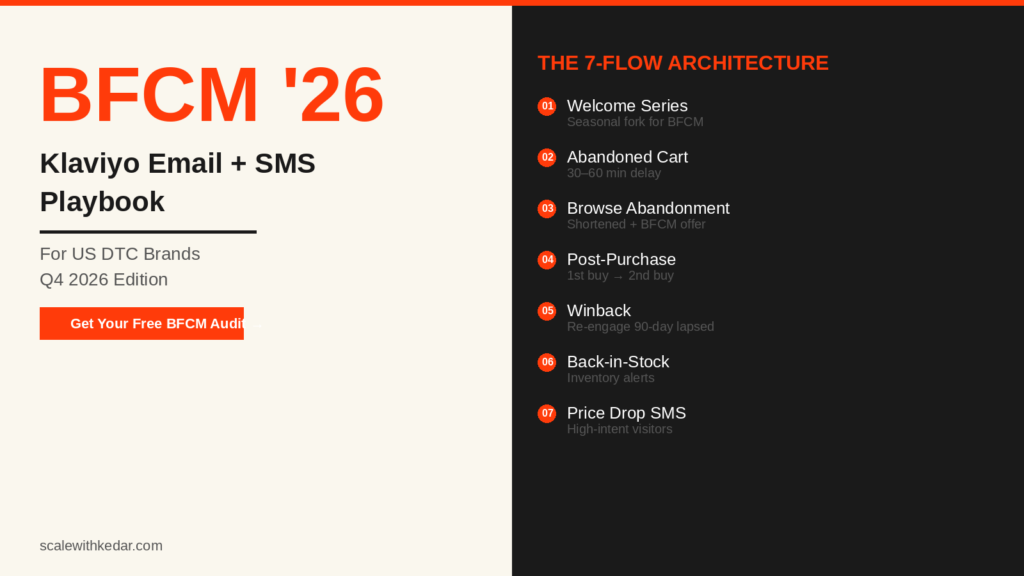
DTC lifecycle marketing coordinates every touchpoint after a customer’s first order — welcome flows, post-purchase education, retention triggers, win-back sequences, and referral asks — with the single goal of extending lifetime value. For US DTC brands competing on thin margins, it’s typically the highest-ROI channel you’re not fully using. Acquiring a customer costs five to seven times more than keeping one. Lifecycle marketing keeps them.
This playbook breaks down the five stages every US DTC brand should automate, explains how to calculate LTV so you’re spending in the right places, and names the tools that work at scale for US-market brands.
What DTC Lifecycle Marketing Actually Means
Most DTC brands treat email and SMS as broadcast channels — newsletters, sale announcements, product drops. Lifecycle marketing is different. It’s behaviour-triggered: the message someone receives is determined by what they did (or didn’t do) rather than what day of the week it is.
A new subscriber gets a welcome series. A first-time buyer gets an onboarding sequence. A customer who hasn’t ordered in 90 days gets a win-back offer. Each sequence is built once and runs automatically, turning one-time buyers into loyalists without burning your team’s bandwidth.
The result is better margins: retention-driven revenue carries no customer acquisition cost.
The 5 Stages of a DTC Customer Lifecycle
Stage 1 — The Welcome Window (0–72 Hours)
The hour after a new subscriber joins your list is when your brand has their fullest attention. Use it. A three-email welcome series — sent at 0 hours, 24 hours, and 48 hours — should accomplish three things: introduce your brand story, demonstrate your product’s specific value to this customer’s life, and make a clear, time-sensitive offer to earn that first purchase.
Keep the conversion goal singular. The brands that win here resist the urge to explain everything. One story, one product, one CTA per email.
Stage 2 — Post-Purchase Education (Days 1–28)
The biggest mistake US DTC brands make post-purchase is going silent until the next promotion. This is where churn starts: buyers who don’t understand how to get full value from a product quietly stop reordering.
A post-purchase flow should deliver: an order confirmation, a shipping update with tracking, a usage or care guide three to five days after delivery, and a soft review or UGC ask at day 14. For consumables, a replenishment reminder at the predicted use-by date is a high-converting addition.
Stage 3 — Repeat Purchase Triggers
Repeat purchase rates are the leading indicator of healthy LTV. Build segment-level triggers around purchase history: if someone bought product A, send a cross-sell to complementary product B at the 21-day mark. If they’ve purchased three times in six months, enroll them in a loyalty segment and offer early access or bundle pricing.
Subscription prompts belong here too — offered at the point of highest satisfaction, not at signup. Customers who convert from one-time to subscription are significantly more profitable over their lifetime.
Stage 4 — Win-Back for Lapsed Customers
Define lapsed by your average repurchase window. If most customers reorder within 60 days, a customer who hasn’t ordered in 90 days is at risk. Win-back sequences work best in three acts: a value reminder, a specific offer, and a final-notice message. If none of those moves the needle, suppress the segment rather than burning your sender reputation with continued cold outreach.
Stage 5 — Advocacy and Referral
Your highest-LTV customers are also your most credible salespeople. A referral ask placed at the right moment — after a fifth purchase, after a glowing review, after a loyalty milestone — converts far better than a generic “tell a friend” email sent to your whole list. Pair the referral ask with an easy-to-share offer structure: the referrer gets something meaningful, the referee gets a tangible discount. Tools like Friendbuy and Referral Candy integrate cleanly with Klaviyo flows for US-market DTC brands.
Calculating LTV: The Number That Should Drive Your Spend
The standard formula: LTV = Average Order Value × Purchase Frequency × Average Customer Lifespan.
Run this for your top 20% of customers and for your bottom 20%. The gap tells you the revenue ceiling for a lifecycle marketing investment. If your top-segment LTV is significantly higher than your average, there’s a clear ROI case for retention-focused spend.
Segment LTV by acquisition source too. Customers acquired through organic search often have higher LTV than those acquired through broad paid social, because search-intent buyers understood what they were buying before they purchased.
Track LTV per cohort — month of first purchase — to identify whether your lifecycle improvements are actually moving the metric. Aggregate LTV is a lagging indicator that obscures cohort-level progress.
Tools Built for US DTC Lifecycle Marketing
Klaviyo is the most widely adopted email and SMS platform for US DTC brands, with strong segmentation, behaviour triggers, and integrations with Shopify, WooCommerce, and Recharge. Its predictive analytics layer can forecast when individual customers are likely to churn or repurchase.
Attentive specialises in SMS, with compliance built for US carriers and strong opt-in tools. It works well alongside Klaviyo when you want SMS-first flows for high-intent segments. Postscript is another solid SMS option with transparent cost-per-send pricing for US-market contacts.
For subscription management, Recharge and Skio offer lifecycle-adjacent tools like skip-a-month prompts, win-back discounts at cancellation, and pause flows — all of which reduce churn without discounting promiscuously.
How to Get Started Without Overwhelming Your Team
If you’re building lifecycle marketing from scratch, sequence your builds by impact: welcome flow first, then post-purchase, then win-back. Retention triggers and referral flows come after the foundation is stable and you have purchase-behaviour data to segment on.
Audit every flow quarterly. A welcome email written for your last product line may actively hurt conversion if your catalogue or positioning has evolved.
Connect lifecycle performance to your attribution data. If you haven’t set up proper tracking for your email and SMS flows, the GA4 attribution guide for US DTC brands is a practical starting point.
And if your checkout is leaking, lifecycle marketing will fill a leaky bucket — fix conversion issues first: the DTC checkout CRO playbook covers the highest-impact fixes for US ecommerce.
Ready to Build Your Lifecycle Marketing Engine?
Lifecycle marketing compounds. Every flow you build today generates revenue for months without additional spend. But the strategy only works when mapped correctly to your cohort data, your tech stack, and your actual customer behaviour.
If you want a structured audit of your current retention gaps and a clear roadmap to closing them, book a strategy call. We’ll review your flows, identify the highest-impact opportunities, and build a prioritised action plan for your US DTC brand.
Related: Meta Ads ROAS optimisation for US DTC brands — because lifecycle and paid acquisition work best when coordinated.