Why Cutting CAC Is the Highest-Leverage Move in DTC Right Now
Customer acquisition cost has quietly become the number one threat to DTC brand profitability in the US. iOS privacy changes, rising CPMs on Meta, and crowded ad auctions mean that what worked in 2021 no longer pencils out. If your CAC has crept up 20–40% over the past two years — and you haven’t changed your payback window or retention model — you’re bleeding margin every day.
This guide breaks down a practical framework for reducing CAC without cutting growth. It’s the approach I research and apply across ecommerce audit engagements: fix measurement first, then creative, then channel mix, then retention. Miss the sequence and you optimise in the wrong direction.
Step 1: Fix Your Measurement Before You Touch Spend
You cannot reduce CAC by adjusting bids and budgets if your attribution is lying to you. Most DTC brands are either over-attributing to last-click (making paid look more efficient than it is) or under-attributing after iOS 14.5 (causing them to scale too conservatively).
Start here:
- Implement Meta Conversions API (CAPI): Server-side event matching recovers a meaningful share of lost iOS signal. If you haven’t done this, you’re flying with a broken altimeter. See how to set it up here.
- Set your attribution window to match your average sales cycle: A furniture brand with a 14-day consideration window should not use a 1-day click window.
- Use blended CAC as your north-star metric: Total marketing spend divided by total new customers acquired — cross-channel, no cherry-picking. Track it weekly.
- Run incrementality tests: A proper geo holdout or Meta lift study tells you the real incremental lift from a channel, not the modeled number the platform reports.
Once you trust your numbers, every optimisation that follows actually moves in the right direction.
Step 2: Fix Creative Before You Fix Bidding
In most DTC accounts I audit, creative — not bidding strategy or budget — is the primary driver of high CAC. Stale ad creative causes CPMs to rise, click-through rates to fall, and ROAS to compress. The audience isn’t tired of you; the algorithm is penalising your creative quality score.
A structured creative testing process is what separates brands with sustainable CAC from those on a constant upward spiral. The framework I recommend:
- Test one variable at a time: Hook vs. hook, format vs. format, offer vs. offer. Don’t mix variables or you’ll never know what moved the needle.
- Judge creative on cost-per-landing-page-view and hold-rate before you look at ROAS. Bad creative that converts on a good offer hides the real problem.
- Build a content velocity machine: The brands keeping CAC in check are producing 8–12 new creative concepts per month across UGC, static, and video. You can’t afford to test quarterly.
- Kill losers fast and scale winners slow: Give a concept 3–5 days at a modest budget. If it’s in the bottom 20% on CPL, kill it. If it’s in the top 20%, scale incrementally — don’t 10x the budget overnight.

If you want a step-by-step guide on building this testing process, this Meta Ads creative testing framework walks through it in detail.
Step 3: Shift Budget Toward Your Highest-Efficiency Channels
Not all acquisition channels have the same CAC, and most DTC brands underinvest in the channels where their cost-per-new-customer is lowest. After fixing measurement and creative, the next lever is channel reallocation.
The typical priority order in audits I run:
- Branded search and non-brand long-tail Google: Often the lowest CAC of any paid channel. If you’re not capturing brand search, you’re letting competitors intercept your own demand.
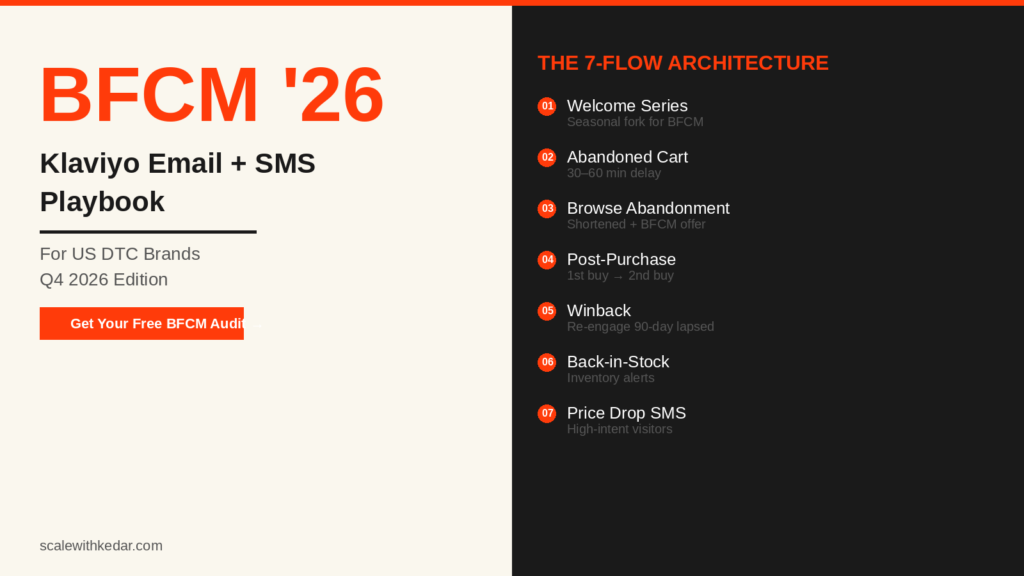
- Email and SMS to warm audiences: Reactivating lapsed customers costs a fraction of acquiring new ones. A well-built Klaviyo flow can dramatically reduce the share of spend you need on cold acquisition.
- Referral and affiliate: Cost-per-acquisition on performance-based channels is inherently tied to results. If your product has strong word-of-mouth, this is often the highest-ROI channel you’re ignoring.
- Meta and TikTok for cold acquisition: These channels work, but they should come after you’ve maxed out the cheaper channels above.
The goal isn’t to abandon paid social — it’s to stop using expensive cold acquisition channels to do the work that cheaper, intent-based channels should be doing.
Step 4: Use Retention to Subsidise Acquisition
The fastest way to reduce your allowable CAC is to increase customer lifetime value. When a customer’s second and third purchase comes faster and larger, you can afford to pay more for the first one. This is the compounding lever that most brands underprioritise.
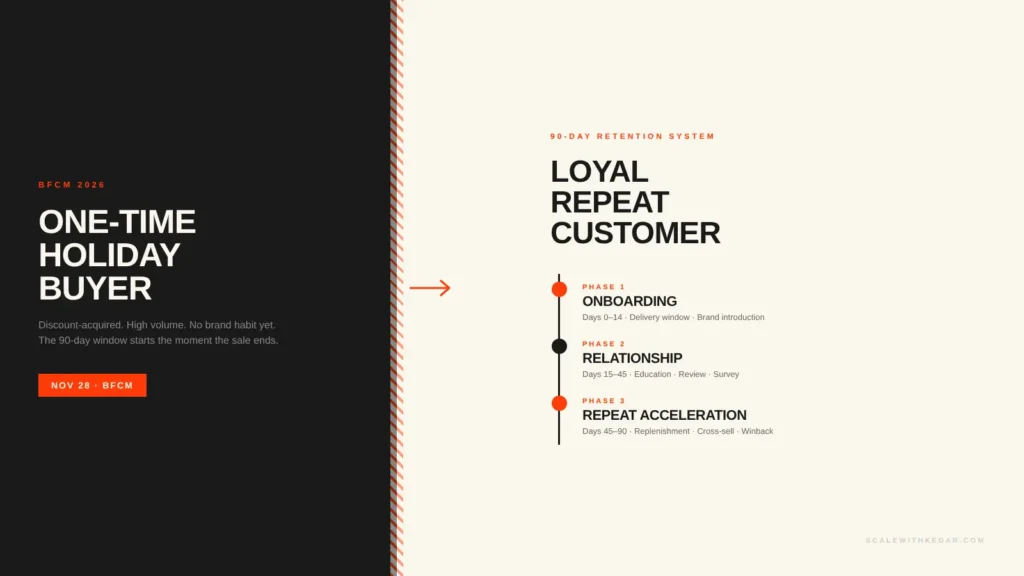
- Shorten time-to-second-purchase: The 30-day window after a first purchase is your highest-leverage retention moment. A well-timed post-purchase email sequence — educational content, a relevant cross-sell, a feedback request — meaningfully moves repurchase rate.
- Segment by purchase behaviour: One-time buyers need different messaging than repeat buyers. Build separate flows for each.
- Use your post-purchase experience as a growth channel: Unboxing experience, product education, and surprise moments drive organic word-of-mouth that lowers blended CAC passively over time.
Step 5: Audit Your Channel Mix Quarterly
CAC is a moving target. What worked in Q1 often becomes expensive by Q3 because competitors enter the same auction, creative fatigue sets in, and seasonality shifts demand. The brands that maintain healthy CAC run a quarterly audit across three dimensions:
- Blended CAC vs. target: Is your overall CAC trending toward or away from your payback-window target?
- CAC by channel: Which channels have become more expensive, and by how much? Where is CAC improving?
- Creative performance decay: What percentage of your active creative is in active testing vs. running stale concepts from more than 60 days ago?
A practical paid media audit framework gives you the structure to run this consistently, rather than scrambling reactively when CAC spikes.
What a Realistic CAC Reduction Looks Like
Based on typical audit findings across DTC ecommerce brands, the most common CAC reduction opportunities break down like this:
- Measurement fixes: Correcting attribution typically reveals that 15–25% of spend was being directed to channels and creatives that looked efficient but weren’t.
- Creative refresh: Replacing bottom-30% performing creative with fresh concepts typically improves blended CPL by 10–20% within 60 days.
- Channel reallocation: Shifting 10–15% of budget from expensive cold acquisition to email/SMS reactivation and branded search typically reduces blended CAC by 8–12%.
These aren’t benchmarks for your specific brand — they’re patterns from audit observations. Your actual numbers depend on your category, AOV, competition, and creative quality. Always measure against your own historical baseline, not industry averages.
The One Metric to Watch Weekly
If you only track one number, make it blended CAC: total marketing spend divided by total new customers in the same period. Segmented by new vs. returning, updated weekly, trended over 90 days. That single metric tells you whether your entire acquisition machine is becoming more or less efficient — and it’s the earliest signal that something has changed before it shows up in revenue.
If your blended CAC has been rising for three consecutive weeks, there’s a problem somewhere in the four areas above: measurement, creative, channel mix, or retention. The framework gives you a structured way to diagnose which one.
Ready to Diagnose Your DTC Brand’s CAC?
If you’re a US DTC or ecommerce founder and your CAC has been trending the wrong direction, a paid media audit is often the fastest way to surface exactly where the inefficiency is. Get in touch to discuss a paid media audit for your brand.