You spend real money getting someone to your site. They browse, add to cart, maybe even start checkout — and then they leave. No purchase. For most US DTC brands, that describes 95–98% of their traffic. Retargeting exists to fix that gap, and when it is set up well, it is one of the highest-ROAS channels in your media mix.
This guide walks through how to build a retargeting strategy that actually converts — not just a generic “show ads to past visitors” approach, but a sequenced, audience-segmented system built for the way modern DTC shoppers actually behave.

Why Retargeting Is Non-Negotiable for DTC in 2026
The average US ecommerce conversion rate sits between 2–4%. That means if you are running paid acquisition on Meta or Google, the overwhelming majority of people who click your ad are not buying on their first visit. Without retargeting, you are paying to bring them in and then losing them forever.
Retargeting solves three specific DTC problems: cart abandonment recovery — recapturing high-intent shoppers who got close but did not convert; top-funnel warm-up — re-engaging cold visitors who browsed product pages with social proof; and post-purchase loyalty — bringing buyers back for their second purchase. In most DTC accounts, retargeting audiences convert at 3–5x the rate of cold prospecting audiences, at a fraction of the CPM.
Step 1: Build Your Retargeting Audience Architecture
Generic “website visitors from the last 30 days” is a starting point, not a strategy. Effective DTC retargeting uses layered audiences based on purchase intent:
- All website visitors, 7 days — high-frequency, recent intent; use for urgency-driven creative
- Product page viewers, 14 days — showed product interest; use specific product creative
- Add to cart, no purchase — 14 days — highest intent outside checkout; prioritise spend here
- Initiated checkout, no purchase — 7 days — near-buyers; use direct offer or urgency
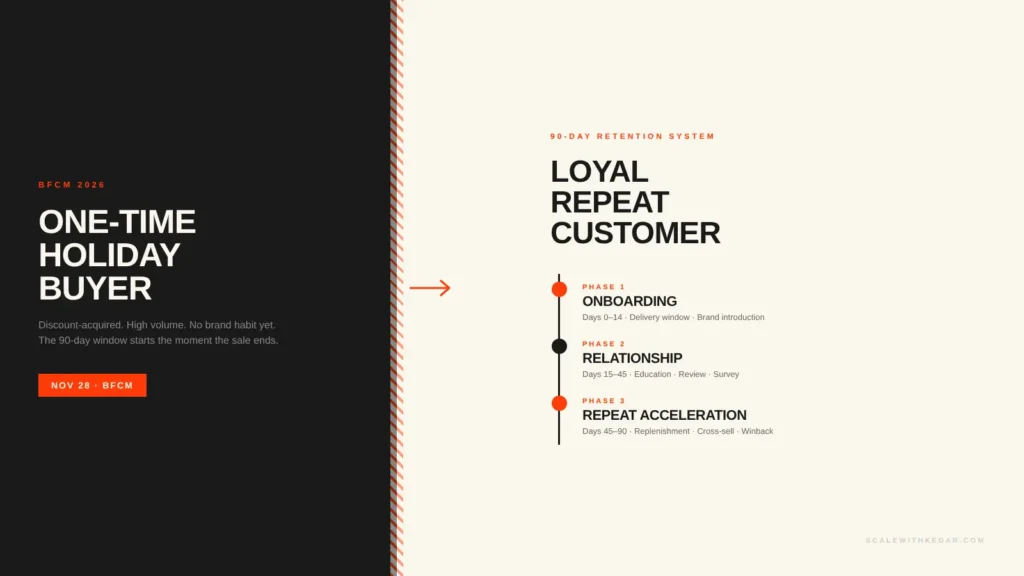
- Past purchasers, 90–180 days — warm audience for replenishment or new SKU launches
On Meta, build these using custom audiences from website events. Critically, ensure your Conversions API (CAPI) is installed alongside your pixel — without it, your signal is degraded on iOS devices, where browser-level tracking alone can miss 30–50% of purchase events.
Step 2: Design a Retargeting Sequence
The biggest mistake in retargeting is showing the same ad to the same person on repeat. A sequenced approach maps different creative to different stages of the retargeting window:
| Stage | Audience Window | Creative Type | Goal |
|---|---|---|---|
| Stage 1 | Days 1–3 after visit | Product reminder — the exact item viewed | Prompt immediate return |
| Stage 2 | Days 4–14 | Social proof — reviews, UGC, testimonials | Build confidence and trust |
| Stage 3 | Days 15–30 | Incentive — free shipping or bundle offer | Break down final hesitation |
Exclude buyers at every stage so you are not wasting spend on people who already converted. On Meta, set up exclusions for the “Purchase” event within the last 30 days.
Step 3: Choose the Right Platforms
Meta (Facebook and Instagram) Retargeting
Meta is typically the primary retargeting channel for DTC brands because of its precise audience targeting, creative flexibility, and depth of purchase intent signals. Use Dynamic Product Ads (DPA) for catalogue-based brands — they auto-pull the exact product each visitor viewed. For brands with fewer SKUs, static video or image ads with strong social proof often outperform DPAs. Pair your retargeting with a solid Meta creative testing framework so you always know which message resonates.
Google Display and Performance Max
Google retargeting works well as a secondary layer, capturing intent at the moment someone is actively searching or browsing. For cart abandoners specifically, running Google retargeting alongside Meta can increase reach and capture shoppers who are more Google-native. Review how Performance Max integrates retargeting signals before setting budget.

Step 4: Creative Best Practices
Retargeting creative is different from prospecting creative — the person already knows your brand, so your job is to overcome a specific objection:
- For checkout abandoners: Lead with the product they left behind. Add a short review or star rating. Keep copy direct: “Still thinking it over? Here is what 2,000+ customers say.”
- For product page viewers: UGC and testimonials perform well. Show real customers and outcomes rather than polished brand imagery.
- For 30-day visitors: Educational content — a short video explaining your differentiation, a comparison with alternatives, or a behind-the-scenes brand story.
- Frequency capping: Cap at 3–5 impressions per week per person. Above that, performance typically drops and you start generating negative brand associations.
Step 5: Measure True Incremental Lift
Retargeting attribution is inherently messy. The most reliable evaluation method is an incrementality test: run your retargeting campaign for 2–4 weeks, create a holdout group that sees no retargeting, and compare purchase rates. The difference is the true incremental lift. Most DTC brands that run this test find retargeting is genuinely incremental — but the magnitude varies by product, purchase cycle length, and competitive environment.
At minimum, track: CPA by audience segment; ROAS by creative stage; frequency vs. CPA correlation (flag when frequency climbs above 5); and overlap between retargeting audiences and organic/direct traffic. If you have not run a full paid media audit recently, retargeting efficiency is one of the first things to examine — it is where leaks are often hiding.
Common Retargeting Mistakes to Avoid
- Retargeting buyers with the same product they already purchased — always exclude recent purchasers from acquisition campaigns
- Skipping the Conversions API — without CAPI, your signal is degraded and your audiences are incomplete on iOS
- Running one ad to all retargeting audiences — different audiences need different messages; a single creative serves none of them well
- Ignoring the 7-day checkout abandoner — this is your highest-intent audience and deserves dedicated budget and creative
Final Thoughts
The brands that get the most out of retargeting treat it as a system — a sequenced, audience-specific, regularly refreshed programme rather than a set-it-and-forget-it campaign. If you have not built your full retargeting architecture yet, start with the highest-intent audience first: checkout abandoners from the last 7 days. Get that right, then layer in broader sequences.
Retargeting alone will not fix a broken product or a poorly positioned offer. But for a DTC brand that has product-market fit and is already spending on acquisition, it is one of the most efficient ways to squeeze more revenue out of every acquisition dollar you have already spent.
Want a paid media audit for your DTC brand? Work with Kedar to diagnose your funnel and build a retargeting strategy tailored to your product and margins.