
Most DTC brands obsess over acquisition. Cost per click, return on ad spend, new customer counts — these metrics dominate every weekly review. But there’s a window that almost every brand underinvests in, and it happens to be the highest-leverage moment in your entire customer relationship: the 72 hours after someone hits “buy.”
What you do after the order confirms shapes whether that customer buys again — or quietly disappears into someone else’s subscriber list. Here’s how US DTC brands are building post-purchase experiences that genuinely drive repeat sales.

Why the Post-Purchase Window Is Your Biggest Growth Lever
Acquiring a new customer costs anywhere from three to seven times more than retaining an existing one. You already know this. What’s less discussed is when you’re most likely to win that second purchase: in the first 30 days after the first one.
During this window, your brand is fresh in the customer’s mind. They just spent money with you. Their inbox has your order confirmation. Their phone may have your tracking notifications. The relationship is warm, and the trust is new — which means it’s fragile but also genuinely open.
A good post-purchase experience doesn’t just deliver the order. It answers unspoken questions before they arise, celebrates the purchase decision, and plants the seed for what comes next. Miss this window, and winning back that customer later is exponentially harder — and more expensive.
The Five Layers of a Winning Post-Purchase Experience
1. The Transactional Layer: Confirmations and Shipping Updates
Your order confirmation and shipping emails are the most-opened messages you’ll ever send. Open rates for transactional emails regularly exceed 70–80%. Yet most DTC brands treat them as logistics notices — plain, functional, forgettable.
Instead, build confirmation and shipping emails that do three things simultaneously:
- Reassure. Reinforce that they made the right call. Include a brief line about what makes your product different, or a single customer quote that mirrors the buyer’s likely reason for purchasing.
- Set expectations. Be specific about timeline. “Your order will arrive between Tuesday, September 23 and Thursday, September 25” is more reassuring than “5–7 business days.”
- Open the next conversation. A short “here’s what to do when your order arrives” section — or a teaser of a complementary product — keeps the brand relationship active rather than transactional.
If you’re on Klaviyo, your order confirmation and fulfillment flows are the easiest flows to optimise for revenue lift without touching your ad budget. Most brands have set them and forgotten them.
2. The Unboxing Layer: Physical Touch
The physical delivery is the one moment in ecommerce where you get to make a sensory impression. The packaging, the insert, the presentation — these details are what customers photograph, share, and remember.
You don’t need to spend a fortune on premium packaging (though at a certain price point, it’s justified). What matters most is intentionality:
- A brief, warm handwritten-style note (even printed) that thanks them personally and tells them who to reach out to if anything’s wrong
- A clear explanation of how to get the most from the product — especially for consumables, supplements, skincare, or any product with a learning curve
- A single, low-friction next step: a QR code to your loyalty program, a referral offer, or simply your social handle with a note to tag you
One well-placed card insert that reduces product uncertainty can meaningfully reduce your return rate and support ticket volume — two things that directly impact your margins.
3. The Review and Social Proof Layer
Reviews are not just for SEO or social proof on your PDP. A well-timed review request is also a re-engagement tool. It brings the customer back to your brand after delivery, asks them to reflect on their experience, and creates a feedback loop you can use to improve.
The timing matters enormously. Send too early (right at delivery) and the customer hasn’t had time to form a real opinion. Send too late and the emotional high of the purchase has faded. For most physical products, 5–7 days post-delivery is the optimal window.
Pair your review request with a genuine offer — not a bribe, but something genuinely useful. A usage tip, a how-to video, a recipe or style guide depending on your product category. This makes the email feel like value delivery rather than a data extraction request.
4. The Loyalty and Referral Onboarding Layer
If you have a loyalty program or referral mechanism — and if you’re serious about repeat revenue, you should — the post-purchase sequence is the right moment to introduce it. Not three months later in a promotional email.
The first-purchase moment is when your customer is most positively disposed toward your brand. This is when a referral offer is most likely to land. “You just made a great purchase — here’s how to share that with a friend and earn credit on your next order” is a natural, non-pushy ask.
Keep the referral mechanic simple. The more steps required, the lower the conversion rate. A unique link that gives the recipient a discount and the referrer store credit is a proven structure.
5. The Repurchase Trigger Layer
The final layer is where the real LTV impact lives. Once you know a customer’s purchase history and your product’s typical consumption rate, you can send replenishment or next-purchase prompts at exactly the right moment.
For consumables (supplements, coffee, skincare, cleaning products), this is straightforward: if a customer buys a 30-day supply on September 1st, they’ll likely need a refill around October 1st. A “how’s your supply holding up?” email landing September 22nd — before they run out — is both useful and timely.
For non-consumable products, the repurchase trigger is about natural expansion. A customer who bought your cookware set is a prime candidate for your cutting boards, utensil sets, or care products. Build a post-purchase cross-sell sequence based on what your best customers naturally buy next.

Common Post-Purchase Mistakes That Kill Repeat Revenue
A few patterns consistently undercut otherwise good post-purchase programs:
- Going dark after delivery. Many brands stop communicating the moment the package is delivered. This is when the customer is most open to hearing from you.
- Sending a discount too soon. Offering a “thank you” discount in the order confirmation email trains customers to wait for discounts instead of paying full price. Hold promotional offers for your second or third post-purchase touchpoint.
- Ignoring negative signals. If a customer contacts support, files a return, or opens a review email and doesn’t complete it, those are signals worth responding to. Proactive outreach after a complaint turns detractors into advocates more reliably than almost anything else you can do.
- Treating all first-time buyers the same. A customer who bought your $12 trial-size product and a customer who bought your $200 flagship kit have different levels of commitment and different paths to their second order. Your post-purchase flows should reflect that.
Measuring What’s Actually Working
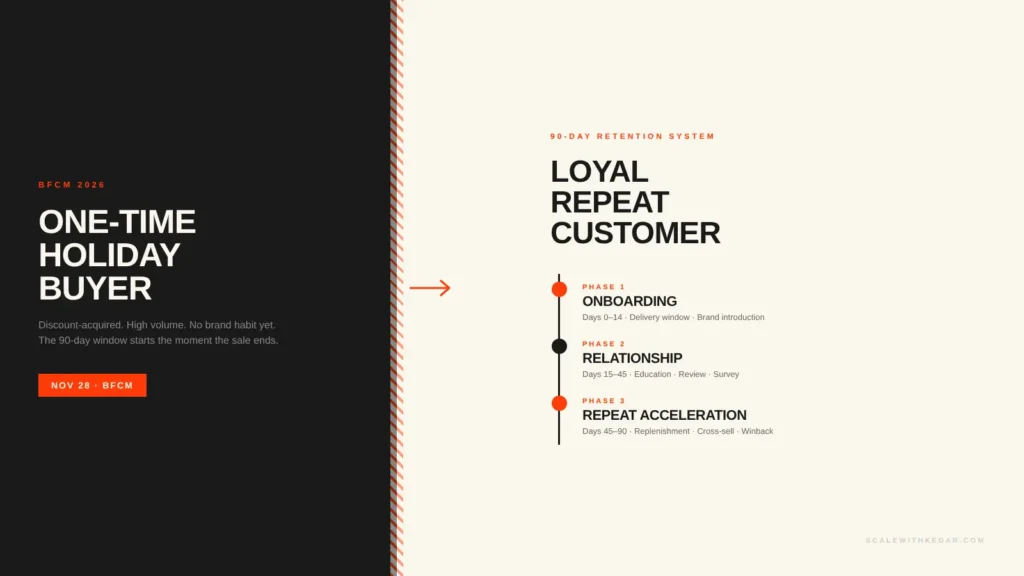
The core metric for post-purchase experience is repeat purchase rate — specifically, what percentage of first-time buyers make a second purchase within 90 days. Industry benchmarks vary widely by category, but for most US DTC brands in the $50–$200 AOV range, a 90-day repeat rate above 25% is strong.
Beyond that, watch:
- Customer satisfaction scores (post-delivery CSAT, if you survey)
- Return and exchange rate by acquisition channel — tells you whether the customer’s expectation matched reality
- Review volume and average rating by cohort
- Referral conversion rate — what percentage of customers who received a referral offer actually referred someone
Track these cohort by cohort. Month-over-month changes tell you whether your optimisations are working or whether a product or fulfilment issue is silently eroding your retention numbers.
Building This Into Your Q4 Strategy
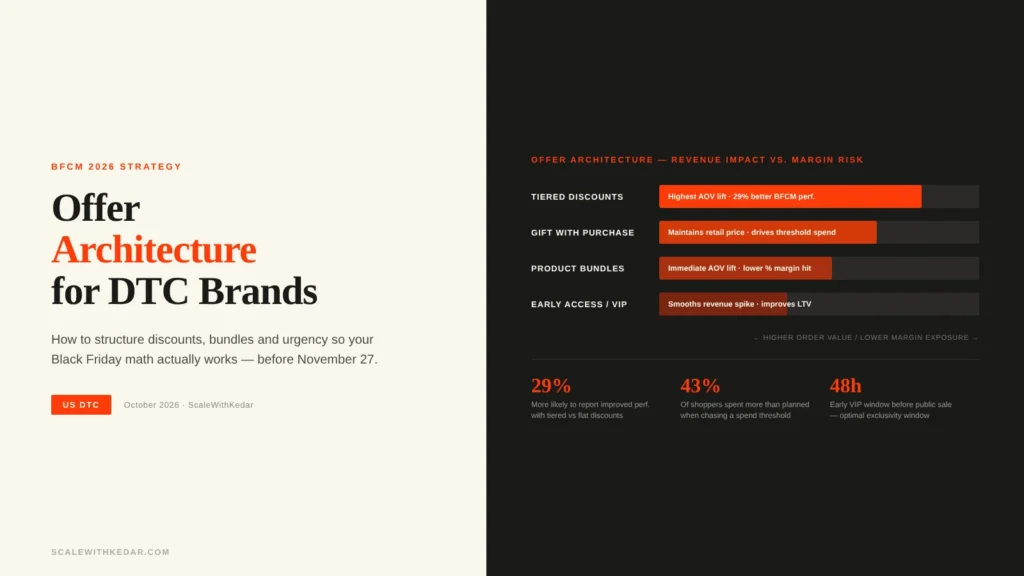
With the holiday season approaching, this matters more than ever. Q4 typically brings a surge of first-time buyers — customers attracted by promotions, gifting, or seasonal campaigns. These customers are often lower intent than your core audience. They bought because of the deal, not necessarily because of your brand.
A strong post-purchase experience is what converts a deal-hunter into a loyal customer. If you’re planning your Q4 marketing calendar, build your post-purchase flows into the plan before the season starts — not after you’re already in it.
Also worth reading: the DTC lifecycle marketing guide walks through how the post-purchase phase connects to your broader retention strategy, and the DTC returns playbook covers what to do when things go wrong — which is often the highest-leverage post-purchase moment of all.
Where to Start if You’re Behind on This
If your post-purchase experience is currently just an order confirmation and a shipping notification, here’s the minimum viable improvement stack, in order of impact:
- Rewrite your order confirmation email to include a reassurance message and one useful piece of content
- Add a 5–7 day post-delivery email with a usage tip and a review request
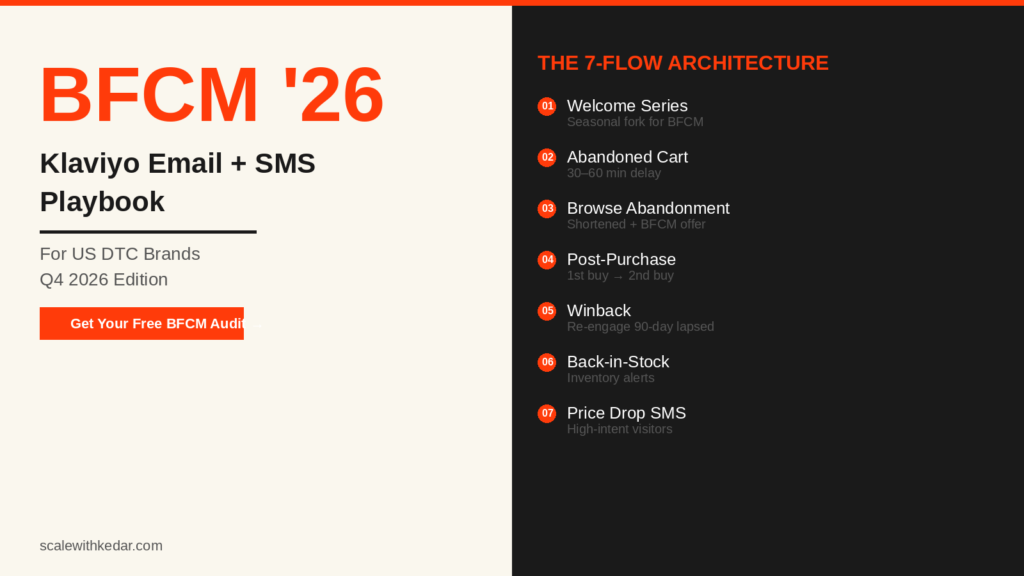
- Build a win-back email for customers who haven’t repurchased in 60 days (the win-back playbook has the framework)
- Add a referral offer to your day-7 post-purchase email
- Build replenishment flows for your top two or three consumable SKUs
You don’t need to build all of this at once. The order confirmation optimisation alone — a 30-minute change — can improve second-purchase rate measurably within one cohort cycle.
If you’d like a second pair of eyes on your current post-purchase setup or want to build this into a broader retention programme, get in touch — this is one of the highest-ROI areas I work on with DTC founders.